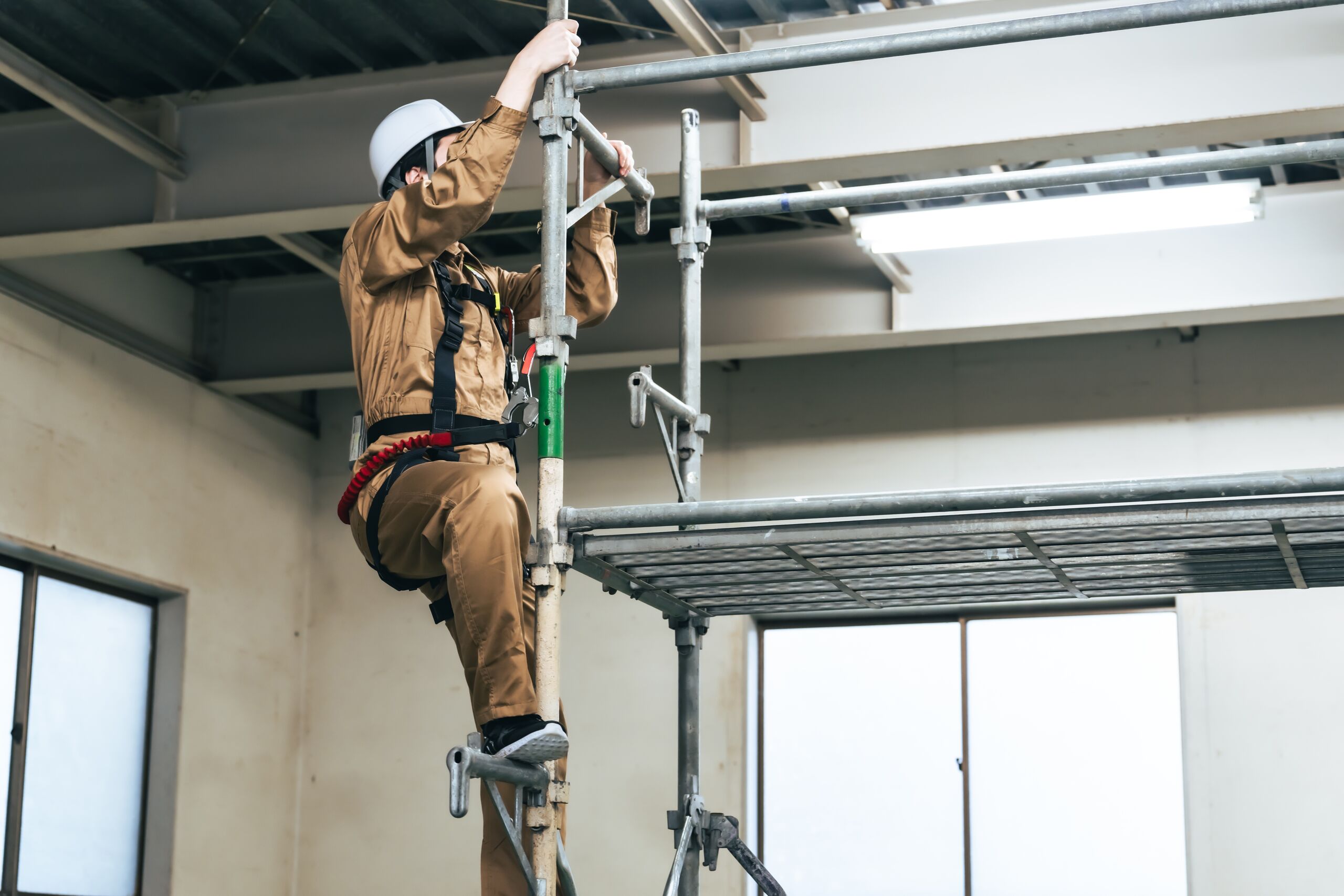
A serious fall on a construction site can change your life in seconds. Broken bones, spinal injuries, head trauma, and months—or years—of recovery often follow. For many injured workers, the physical pain is quickly compounded by frustration when they’re told there’s only one option for compensation: workers’ compensation.
While workers’ comp is an important safety net, it is also limited. It does not pay full wages, does not compensate for pain and suffering, and does not always reflect the true cost of a life-altering injury. Worse, it usually prevents you from suing your direct employer—even when their safety failures played a role in your fall.
But here’s the critical point many injured workers are never told: your employer is often not the only party responsible for safety on a construction site.
In New York, construction sites are complex environments where multiple companies operate together. General contractors, property owners, subcontractors, and third-party vendors all have legal duties. When one of them creates or allows a dangerous condition, they may be legally responsible—even if they weren’t your employer.
Understanding how third-party construction accident liability works can be the difference between receiving modest workers’ comp benefits and meaningful compensation that actually reflects what you’ve been through.
Key Takeaways: Third-Party Liability After a Construction Site Fall
- Falls on construction sites often involve multiple responsible parties, not just your employer
- Workers’ compensation usually blocks lawsuits against your employer—but not against third parties
- General contractors, property owners, and subcontractors can often be sued for unsafe conditions
- OSHA violations frequently support third-party negligence claims
- Identifying third-party liability is often the key to recovering full compensation
Why Workers’ Compensation Is Only Part of the Story
Workers’ compensation exists to provide fast, no-fault benefits to injured employees. You don’t have to prove negligence, and benefits typically include medical treatment and partial wage replacement.
But workers’ comp also comes with strict tradeoffs. You generally cannot sue your employer, even if:
- They failed to provide safety equipment
- They ignored known hazards
- They violated safety regulations
And workers’ comp does not cover:
- Pain and suffering
- Emotional distress
- Full lost income
- Loss of future earning capacity
For workers who suffer serious fall injuries, these limitations often leave massive financial gaps.
That’s where third-party liability comes in.
What Is Third-Party Construction Accident Liability?
Third-party liability refers to legal responsibility held by someone other than your direct employer whose negligence contributed to your injury. On most New York construction sites, multiple entities are involved, including:
- Property owners
- General contractors
- Construction managers
- Subcontractors
- Equipment suppliers
Each of these parties may have independent duties under New York law to maintain a safe site. When one of them fails to do so, they may be sued in a separate civil lawsuit, even while you receive workers’ comp benefits.
This is not an exception or loophole—it is a well-established legal principle in New York construction accident law.
How Third-Party Claims Work Alongside Workers’ Compensation
Many injured construction workers are told—often incorrectly—that workers’ compensation is their only legal option after a job-site fall. In reality, workers’ compensation and third-party injury claims serve different purposes, and in many cases, they can move forward at the same time.
Workers’ compensation is designed to provide immediate, no-fault benefits. It can help cover medical treatment related to the injury and provide partial wage replacement while you are unable to work. However, workers’ comp does not require anyone to admit wrongdoing, and it does not account for the full impact a serious injury can have on your life.
A third-party lawsuit, on the other hand, is based on negligence and responsibility. It allows an injured worker to pursue compensation from parties other than their direct employer—such as a general contractor, property owner, or another subcontractor—when those parties played a role in creating or allowing the dangerous condition that caused the fall.
These claims often proceed in parallel, but they must be carefully coordinated. Workers’ compensation carriers may have a right to be reimbursed for benefits they paid if the injured worker later recovers money from a third party. This process, known as a workers’ compensation lien, is common—but it does not eliminate the value of a third-party claim.
In fact, even after addressing reimbursement issues, third-party recoveries frequently result in significantly greater net compensation than workers’ comp alone could ever provide. For workers with serious injuries, this additional compensation can be critical to long-term financial stability and quality of life.
Because timing, strategy, and coordination matter, it’s important that both claims are handled with a clear understanding of how they affect each other. When managed properly, workers’ compensation can provide short-term support while a third-party claim pursues the full measure of compensation the law allows.
Why Construction Sites Create So Many Third-Party Claims
Construction sites are uniquely prone to third-party liability because safety responsibilities are divided among multiple parties. Your employer may supervise your specific work, but they often do not control the site as a whole. Instead:
- A general contractor may control scheduling, coordination, and safety oversight
- A property owner may hire all contractors and retain authority over conditions
- Another subcontractor may create hazards that affect everyone on site
When someone with control over the site allows unsafe conditions to exist, they can be held responsible—even if you never worked for them directly.
Common Third Parties That May Be Responsible for a Construction Accident
When considering who may be responsible for your accident and resulting injuries, these are the most likely third parties that might be at fault:
General Contractors
General contractors (GCs) often bear the greatest responsibility for site-wide safety. They typically control:
- Work sequencing
- Safety coordination
- Enforcement of safety rules
If a GC fails to address unsafe scaffolding, unsecured ladders, missing guardrails, or hazardous debris, they may be liable for resulting injuries.
Property Owners
Property owners are often surprised to learn they may be liable for construction injuries. Under New York law, owners frequently retain non-delegable duties to ensure safety—especially under New York Labor Law §§ 200, 240, and 241.
An owner may be liable if they:
- Had authority over the work
- Knew or should have known about a dangerous condition
- Failed to ensure proper safety measures were in place
Subcontractors
Another subcontractor on site can also be responsible if they:
- Created the hazardous condition
- Left debris, materials, or equipment in unsafe areas
- Failed to secure tools or materials at height
Subcontractor negligence on construction sites is a frequent cause of falls, especially in crowded or fast-paced projects.
OSHA Violations and Third-Party Claims
OSHA regulations exist to prevent exactly the types of falls that injure construction workers every day. When OSHA rules are violated, those violations often support third-party liability claims, such as:
- Failure to provide fall protection
- Improper scaffold construction
- Unsafe ladder use
- Inadequate training or supervision
While OSHA violations alone do not automatically create liability, they are powerful evidence that a party failed to meet basic safety standards. An OSHA violation tied to a third-party claim can significantly strengthen a personal injury case.
“My Employer Doesn’t Have Workers’ Comp—Who Else Can I Sue?”
This is a common and urgent question.
If your employer illegally failed to carry workers’ compensation insurance, you may be able to sue them directly. But even when workers’ comp exists, third-party claims may remain available.
When employers are underinsured, insolvent, or shielded by workers’ comp rules, third-party claims often become the primary source of recovery.
This is why injured workers should always speak with a New York construction accident lawyer who can evaluate all possible defendants—not just the obvious ones.
Why Insurance Companies Don’t Want You to Know About Third-Party Claims
Insurance companies prefer injured construction workers to pursue workers’ comp claims because:
- Benefits are capped
- Pain and suffering is excluded
- Long-term exposure is limited
Third-party lawsuits, by contrast, expose insurers to:
- Full wage loss
- Pain and suffering damages
- Future economic losses
As a result, insurers often:
- Downplay third-party involvement
- Blame the injured worker
- Frame the accident as “just part of the job”
Identifying third-party liability early is essential to preventing insurers from avoiding responsibility.
What Evidence Matters in Third-Party Construction Fall Cases?
Third-party construction accident cases cannot be built on assumptions or general statements about safety—they hinge on proving who controlled the site, what safety measures were required, and how those obligations were breached. Because multiple companies are usually involved, solid evidence is what allows your legal team to trace responsibility back to the correct parties.
One of the biggest challenges in construction fall cases is that worksites are constantly changing. Hazards are repaired, scaffolds are dismantled, equipment is removed, and conditions that caused an injury may disappear within days—or even hours.
That makes early investigation especially critical. The sooner evidence is identified and preserved, the stronger the foundation of a third-party claim will be.
Key types of evidence that often play a central role include:
- Site photographs and videos that capture unsafe conditions, missing guardrails, unsecured ladders, debris, or elevation hazards exactly as they existed at the time of the fall. Even cellphone photos taken by coworkers can be invaluable.
- Incident and accident reports, including internal company reports, daily logs, and safety meeting records. These documents can reveal prior complaints, known hazards, or inconsistencies in how the accident is later described.
- OSHA citations and investigation records, which may document violations of federal safety regulations. While OSHA findings are not automatic proof of liability, they can strongly support claims that a third party failed to meet basic safety obligations.
- Safety manuals, contracts, and site agreements are often overlooked but extremely important. These documents help determine which company was responsible for safety supervision, equipment, inspections, and hazard correction. They are frequently the key to establishing third-party liability.
- Witness testimony, including statements from coworkers, supervisors, or other trades working on site. Witnesses can confirm how long a hazard existed, who created it, and whether complaints were ignored.
- Expert analysis, such as testimony from construction safety experts or engineers, who can explain how the accident occurred, why proper safety measures were required, and how the failure to provide them caused the fall.
Taken together, this evidence helps answer the most important legal questions:
- Who had the authority to fix the hazard?
- Who failed to act?
- How did that failure lead directly to the injury?
Because construction sites evolve so quickly, delays often benefit insurance companies and defendants—not injured workers. Scaffolds are taken down, ladders are replaced, and dangerous conditions are quietly corrected only after someone is hurt.
Partnering with an experienced construction injury law firm early gives your legal team the best opportunity to preserve proof, identify responsible parties, and build a claim that reflects what actually happened—not a rewritten version after the fact.

Frequently Asked Questions About Third-Party Construction Accident Liability
What if multiple companies were involved?
That is common. Liability can be shared among several parties, and each may carry separate insurance coverage to cover your losses.
Do I need to know who caused the hazard?
Not necessarily. A legal investigation can identify responsible parties through contracts, site control analyses, and safety records, ensuring all liable parties are named.
What if I share some fault for my construction fall in New York?
New York follows comparative negligence rules, so even if you share some fault, that does not automatically eliminate your claim. Talk to a dedicated construction accident attorney to learn about your unique rights.
How long do I have to file a third-party lawsuit?
Most construction injury lawsuits must be filed within New York’s statute of limitations, which allows filing up to three years from the date of the accident, but shorter deadlines may apply in some cases. Talk to a qualified personal injury lawyer to ensure you don’t miss this important deadline.
Finding Accountability Beyond Your Employer
A construction site fall is rarely just an accident. More often, it is the result of poor planning, ignored safety rules, or dangerous shortcuts made by parties with the power—and obligation—to do better.
If your injuries are serious, relying solely on workers’ compensation may leave you financially vulnerable for years to come. Identifying third-party liability is often the only way to pursue compensation that truly reflects the impact of your injuries.
Speak With Our New York Construction Accident Lawyers at Omrani & Taub Today
If you were injured in a construction site fall, understanding who else may be legally responsible is critical. Third-party liability claims are complex, heavily contested, and too important to evaluate without experienced guidance.
The team at The Law Offices of Omrani & Taub, P.C. has years of experience representing injured construction workers throughout New York and uncovering third-party liability in high-stakes cases. We understand how general contractors, property owners, and subcontractors operate—and how to hold them accountable under New York law.
We offer free consultations and bilingual assistance to help injured workers understand their rights, evaluate all compensation options, and take informed next steps. Call 1-800-JUSTICE® to speak with our team and learn how we can help protect your future.