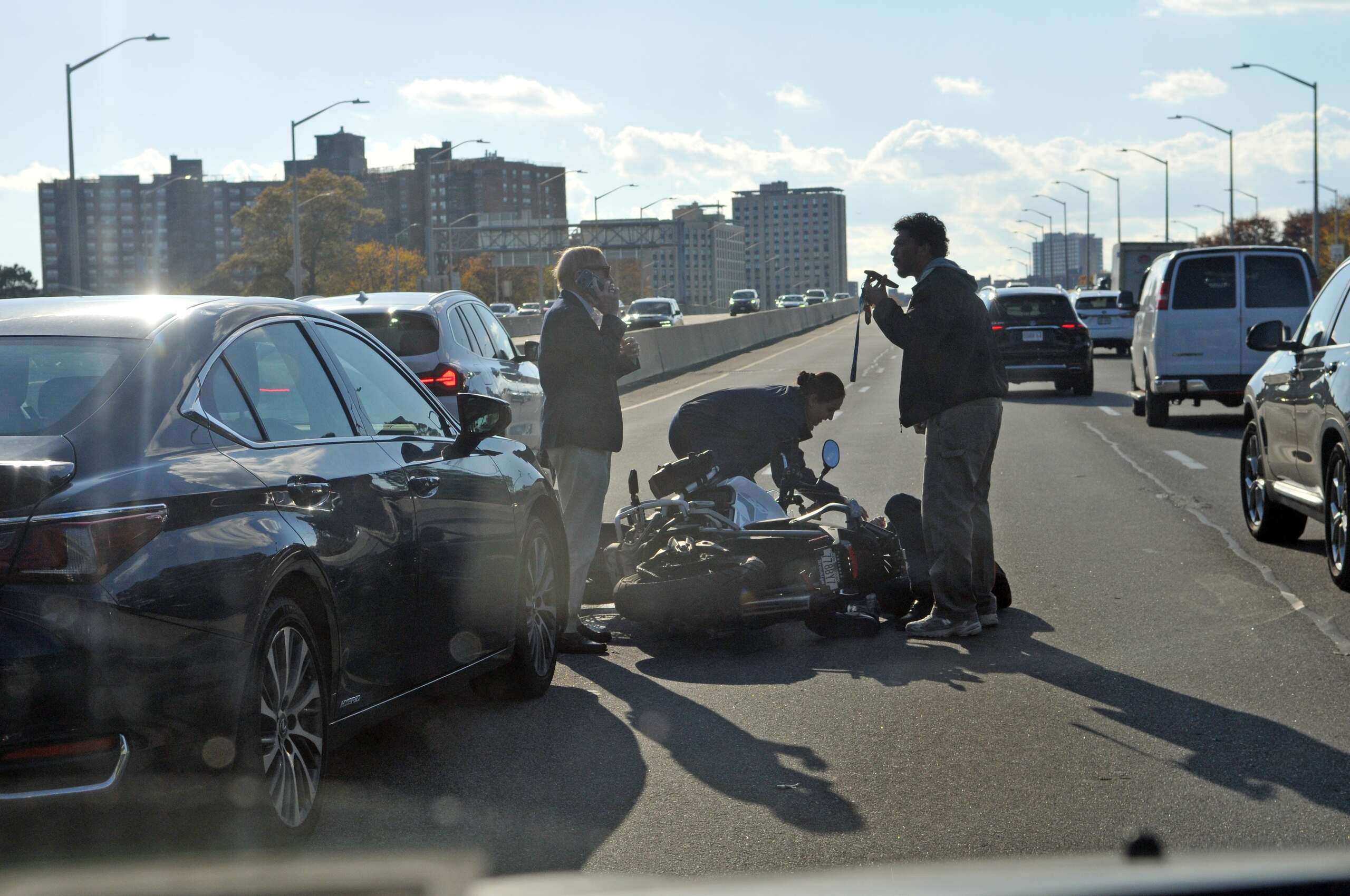
A motorcycle crash in New York often creates two emergencies at once. The first is physical: pain, injuries, emergency care, and recovery. The second is financial, and it often creates just as many problems.
Many injured riders assume that medical bills will be handled the same way they are after a car accident—through New York’s No-Fault insurance system. That assumption is understandable. After all, New York is a “No-Fault” state, and most drivers know that medical expenses are typically paid regardless of who caused the crash.
But for motorcyclists, that protection does not apply.
New York law contains a specific exclusion that leaves motorcycle riders outside the No-Fault system entirely. This legal distinction catches many injured bikers off guard and often creates confusion, delayed treatment, insurance disputes, and unexpected liens.
Understanding how this exclusion works—and what options exist instead—can make a critical difference in protecting your health, finances, and legal rights after a motorcycle accident.
Key Takeaways About Why Motorcyclists Don’t Have No-Fault Coverage in New York
- New York’s No-Fault insurance system does not cover motorcyclists by law
- Injured riders do not receive automatic payment of medical bills through PIP
- Medical expenses are often paid through private health insurance, which may later assert liens
- In many cases, pursuing a claim against the at-fault driver becomes essential to recover medical costs
- Early legal guidance can help prevent billing mistakes, coverage gaps, and long-term financial harm
What “No-Fault” Insurance Means in New York — And Who It Covers
New York’s No-Fault insurance system is governed by Article 51 of the New York Insurance Law. The system was created to solve a very practical problem: after a motor vehicle accident, injured people often need medical care immediately, but determining who was at fault can take months. No-Fault insurance was designed to bridge that gap.
Under this system, certain categories of people injured in motor vehicle accidents can receive prompt payment of basic economic losses, regardless of who caused the crash. These benefits are typically paid through Personal Injury Protection (PIP) coverage and are intended to reduce delays, limit early litigation, and ensure access to treatment.
Coverage for vehicle crashes other than motorcycles
In a typical car accident, No-Fault coverage allows an injured person to begin medical treatment right away without waiting for an insurance investigation or liability decision. Hospital bills, follow-up care, diagnostic testing, rehabilitation, and in some cases a portion of lost wages are paid automatically up to statutory limits. Questions about fault are addressed later, and lawsuits are generally limited to cases involving “serious injury” as defined by New York law.
This structure applies broadly. Drivers and passengers in standard motor vehicles are covered, as are pedestrians and bicyclists struck by cars. In those situations, the injured person usually does not need to worry about who will pay for their initial medical care.
The system is designed to function almost like an emergency safety net, activating immediately after the crash. Because of this, many New Yorkers understandably assume that any motor vehicle accident triggers No-Fault benefits. For car accidents, that assumption is usually correct.
For motorcycle accidents, it is not.
Motorcycle crashes are treated differently
Despite involving motor vehicles and often resulting in severe injuries, motorcyclists are specifically excluded from New York’s No-Fault system. This exclusion is written directly into the statute and applies even when the rider did nothing wrong and even when injuries are catastrophic.
That single legal distinction—often unknown to riders until after an accident—fundamentally changes how medical bills are paid, how quickly financial pressure builds, and how urgently legal action may be required.
After a serious motorcycle crash, it’s crucial to consult with an experienced New York motorcycle accident lawyer to fully understand your rights and what alternatives exist to help you pay your accident-related bills.
The Motorcycle No-Fault Exclusion: What the Law Actually Says
New York Insurance Law explicitly excludes motorcycles from the definition of a “covered vehicle” under No-Fault. This exclusion is intentional and longstanding.
As a result:
- Motorcyclists do not receive PIP benefits
- There is no automatic coverage for emergency care
- No-fault wage replacement does not apply
- Riders must immediately identify alternative payment sources
This exclusion is often referred to as the Article 51 exclusion, and it is one of the most significant—and least understood—legal issues facing injured motorcyclists in New York.
Facing the Immediate Problem After a Motorcycle Crash: Who Pays the Hospital Bills?
After a serious motorcycle accident, medical treatment is often urgent and unavoidable. At that point, the injured rider is not thinking about insurance law or statutory exclusions. They are focused on pain, survival, and recovery. But behind the scenes, the financial clock starts ticking almost immediately.
For people injured in car accidents, No-Fault insurance typically steps in automatically to cover medical expenses. Motorcycle riders do not have that protection. As a result, many injured bikers leave the hospital with the same questions:
- Will my own car insurance pay these bills?
- Will the driver who hit me be responsible right away?
- Am I going to be personally billed for emergency care?
In most motorcycle accident cases in New York, the answers are not reassuring.
Car insurance policies that include Personal Injury Protection (PIP) generally do not cover motorcycle crashes. Even if the rider owns a car and carries full coverage on that vehicle, those No-Fault benefits usually do not apply to injuries sustained while riding a motorcycle.
At the same time, the at-fault driver’s insurance company is also not required to pay medical bills immediately. Liability insurers typically wait until fault is investigated, responsibility is disputed or accepted, and a claim is formally presented. That process can take months, and during that time, hospitals, surgeons, and treatment providers still expect payment.
Medical providers may bill the rider directly, submit claims to private health insurance if available, or begin collection activity if payment issues are not resolved. For riders without private health insurance, the situation can become even more dire.
How Medical Bills Are Usually Paid for Injured Motorcyclists
Because PIP does not apply, medical expenses typically follow one of these paths:
Private Health Insurance
Many injured riders must rely on their private health insurance to cover treatment. While this allows care to proceed, it often comes with:
- Deductibles and co-pays
- Treatment disputes
- Coverage limitations
- Future reimbursement demands (liens)
Health insurers frequently reserve the right to seek reimbursement from any settlement or lawsuit recovery related to the accident.
Out-of-Pocket Payments
If a rider lacks health insurance or faces coverage gaps, bills may be sent directly to the injured person. This can quickly lead to overwhelming financial pressure.
Civil Lawsuits Against the At-Fault Driver
Ultimately, many riders must pursue compensation from the driver who caused the crash to recover medical costs. However, liability claims take time and do not provide immediate payment.
| Key Aspect | Private Health Insurance | Out-of-Pocket or Civil Lawsuit |
|---|---|---|
| How treatment is covered | Injured riders rely on their private health insurance to pay for medical care. | Medical bills may be sent directly to the injured person or later recovered through a civil lawsuit against the at-fault driver. |
| Immediate costs | Often includes deductibles and co-pays. | The injured rider may have to pay medical bills out of pocket. |
| Common issues | Possible treatment disputes and coverage limitations. | Can create significant financial pressure on the injured person. |
| Future reimbursement | Insurers may seek reimbursement from any settlement or lawsuit recovery (liens). | No insurance reimbursement applies if no health insurance is involved. |
| Recovering compensation | Insurance helps cover treatment but may later claim reimbursement. | The rider must pursue compensation from the at-fault driver to recover medical costs. |
| Time to receive compensation | Medical care can proceed quickly through insurance. | Liability claims take time and do not provide immediate payment. |
Why You Can’t Rely on the At-Fault Driver’s Insurance for Immediate Coverage
Unlike No-Fault benefits, liability insurance does not pay automatically. Before any payment is made, insurers typically require:
- A full investigation
- Statements from both parties
- Review of police reports
- Medical documentation
- Negotiation or litigation
This process can take months—or longer. In the meantime, injured riders still need treatment, rehabilitation, and follow-up care. This underscores the importance of having SUM coverage in New York, which serves as a vital safety net to cover medical costs and damages when the at-fault driver’s insurance is insufficient.
The Role of Health Insurance Liens in Motorcycle Accident Cases
When private health insurance pays medical bills related to a motorcycle accident, it often does so conditionally. This means the insurer may later assert a lien against any settlement or verdict.
A lien allows the insurer to seek reimbursement for amounts it paid once the injured rider recovers compensation from another party.
This creates a critical issue: Even if you “win” your case, a significant portion of the recovery may be claimed by insurers unless liens are properly addressed.
Managing liens requires careful legal analysis and negotiation. Mishandling them can significantly reduce the net compensation an injured rider receives. This is when a dedicated personal injury lawyer can become your biggest ally.
Why Early Legal Action Matters More for Motorcyclists
Because riders do not have No-Fault protection, timing becomes critical. Early legal involvement can help:
- Identify all available insurance coverage
- Coordinate medical billing properly
- Prevent damaging statements to insurers
- Preserve evidence before it disappears
- Address lien issues proactively
- Protect against unfair blame-shifting
Delays often benefit insurance companies—not injured riders. Contact a knowledgeable motorcycle crash injury law firm as soon as possible to start protecting your rights.
Why Insurance Companies Treat Motorcycle Claims Differently
Motorcycle accident claims are frequently scrutinized more aggressively than car accident claims. Insurers may argue:
- The rider assumed greater risk by simply being on a bike
- The rider’s speed or maneuvering caused the crash
- Protective gear choices worsened injuries
- The injuries are exaggerated
These arguments can affect both liability and damages. Without No-Fault benefits to provide a safety net, riders often face stronger resistance from insurers at every stage.
What Compensation May Be Available to Injured Motorcyclists in a Civil Lawsuit?
Unlike No-Fault claims, motorcycle accident lawsuits allow recovery for a broader range of damages, including:
- Past and future medical expenses
- Lost income and reduced earning capacity
- Pain and suffering
- Emotional distress
- Long-term disability and care needs
However, compensation is not automatic. It must be proven, documented, and supported by evidence.

Frequently Asked Questions About Motorcycle No-Fault Coverage in New York
Can I use my own health insurance after a motorcycle accident?
Yes. Because motorcyclists are excluded from New York’s No-Fault system, private health insurance is often the primary source of coverage for medical treatment after a motorcycle crash.
However, it is important to understand that health insurance does not function the same way as No-Fault. Many health insurers will pay for treatment initially but may later assert a right of reimbursement, known as a lien, if you recover compensation from the at-fault driver through a settlement or lawsuit. These liens can significantly affect the net amount you ultimately receive. A skilled injury lawyer can negotiate your liens to reduce them as much as possible.
What if I don’t have health insurance?
If you do not have private health insurance, the financial pressure after a motorcycle accident can escalate quickly. Hospitals and medical providers may bill you directly, require payment arrangements, or delay non-emergency treatment.
In this situation, pursuing a claim against the at-fault driver becomes especially urgent because liability insurance may ultimately be the primary source of compensation for medical expenses.
An experienced motorcycle accident lawyer can help explore available options, communicate with providers, and work to prevent gaps in care while your claim is pending.
Can I recover medical bills through a lawsuit?
Yes. Medical expenses are often one of the largest components of a motorcycle accident injury claim. In a lawsuit or settlement against the at-fault party, you may seek compensation for both past and future medical costs related to the crash.
Unlike No-Fault benefits, which are capped and limited in scope, a liability claim allows for recovery of the full extent of reasonable and necessary medical expenses, provided responsibility can be established.
How does the No-Fault exclusion affect the timing of a motorcycle accident claim?
The No-Fault exclusion often accelerates the legal timeline for motorcycle accident cases. Since there is no automatic medical coverage, injured riders cannot afford to wait months to determine fault or begin a claim.
Early investigation, evidence preservation, and insurance analysis are critical. Delays can lead to unpaid medical bills, insurance disputes, or missed opportunities to secure compensation from all available sources. This is why many motorcycle accident cases require faster legal action than standard car accident claims.
Speak With a New York Motorcycle Accident Lawyer at Omrani & Taub to Learn More
The No-Fault exclusion is one of the most serious legal challenges injured motorcyclists face in New York. Without automatic medical coverage, every decision made after a crash carries higher stakes.
If you were injured in a motorcycle accident, the motorcycle accident lawyers at The Law Offices of Omrani & Taub, P.C. can help you understand your options, protect your medical care, and pursue the compensation you may be entitled to under New York law.
Our firm offers free consultations and bilingual assistance to help injured riders navigate this complex legal landscape with clarity and confidence. Call 1-800-JUSTICE® to learn more and take the next step toward protecting your recovery.