
Winter in New York City brings more than cold temperatures and snow-covered sidewalks. It also brings a surge of slip and fall injuries caused by icy walkways, untreated entrances, and hazardous pedestrian conditions. Every year, thousands of people are seriously hurt after slipping on snow or ice outside apartment buildings, storefronts, and commercial properties.
Yet many injured people are surprised to learn that not every winter-related fall gives rise to legal liability, even when the injuries are severe. One legal doctrine, raised frequently by property owners and their insurers, often stops these cases before they even begin:
The “storm in progress” defense.
This defense is one of the most powerful—and most misunderstood—tools used in New York slip and fall cases. It allows property owners to argue that they had no legal duty to remove snow or ice because the storm was still ongoing at the time of the accident.
When injured New Yorkers understand how this defense works—and how it can be challenged—it can make the difference between a denied claim and a case that allows the victim to receive the compensation they need to recover.
Key Takeaways: The Storm in Progress Defense in New York
- Under New York law, property owners generally have no duty to remove snow or ice while a storm is ongoing.
- This rule is commonly referred to as the storm in progress defense and is one of the most frequently raised defenses in winter slip and fall cases.
- Once the storm ends, property owners must be given a reasonable amount of time to address hazardous conditions.
- In many cases, the ice that caused a fall is not new storm accumulation, but older ice that existed before the storm—a critical distinction that can defeat this defense.
Why Winter Slip and Fall Cases Are Treated Differently in New York
New York courts recognize that it is often unreasonable to expect property owners to keep sidewalks, walkways, and entrances completely clear while snow, sleet, or freezing rain is actively falling. Conditions can change by the minute, and constant removal during a storm may be ineffective or unsafe.
For that reason, courts developed what is known as the storm in progress defense. Under this doctrine, a property owner’s duty to remove snow or ice is generally suspended while the storm is in progress and for a reasonable amount of time after the precipitation stops, usually a few hours.
This legal principle is meant to balance public safety with practicality—but in real-world cases, it is often stretched far beyond its original purpose by property owners and their insurance companies.
What the “Storm in Progress” Defense Actually Means

The storm in progress defense does not mean that property owners are never responsible for winter slip and fall accidents. Instead, it means that the timing surrounding the storm matters.
If a person slips and falls while precipitation is actively falling, property owners will often argue that:
- The storm had not yet ended
- They had no legal obligation to remove snow or ice at that moment
- The hazardous condition was temporary and weather-related
When this defense applies, courts may rule that the property owner did not breach any legal duty, even if the conditions were dangerous. However, the key issue is not simply whether it was snowing that day, but what caused the ice or snow that specifically led to the fall.
Learn how winter slip and fall claims in NYC can be blocked by the “storm in progress” defense—and what you must know before pursuing compensation.
The Critical Question: Was It New Snow or Old Ice?
This is where many winter slip and fall cases are won or lost. Property owners and insurers often try to frame every winter accident as the result of “current weather conditions.” But in reality, many people slip on ice that formed days earlier, long before the storm precipitation that was falling at the time of the accident.
Examples of prior hazards that can lead to a fall include:
- Refrozen snow that was never properly cleared after a prior storm
- Meltwater that froze overnight due to poor drainage
- Black ice caused by defective grading or runoff
- Ice created by leaking gutters or downspouts
In these situations, the hazardous condition did not arise from the ongoing storm—it existed beforehand. And when that can be proven, the storm in progress defense may fail.
How Courts Analyze Storm in Progress Cases
Courts do not simply accept a property owner’s statement that it was snowing at the time of the accident. Instead, they look closely at objective evidence, including proof of:
- When the storm actually began
- When the rain or snow ended
- The type of precipitation involved
- Temperature fluctuations before and after the storm
- Whether the condition was caused by accumulation or by refreezing
This analysis often depends on weather data, not opinions. A skilled personal injury lawyer can investigate the circumstances surrounding your fall and gather independent evidence to help support your claim that the hazardous situation you encountered was not due to a storm in progress.
The Role of Forensic Meteorologists in These Cases
In contested winter slip and fall cases, attorneys may rely on the expert testimony of forensic meteorologists. These are professionals who analyze historical weather data to reconstruct conditions at a specific location and time.
A forensic meteorologist can help determine:
- Whether precipitation was falling at the time of the accident
- Whether recent temperatures allowed for melting and refreezing
- Whether ice formation was consistent with an older condition
- Whether the storm had already ended before the fall
This type of analysis can be especially important when insurers argue that the fall was caused by “new snow,” even though the dangerous ice may have been present for days.
What is the “Reasonable Time” Rule After a Storm Ends?
Once a storm ends, the storm in progress defense no longer applies. However, property owners are still given a reasonable amount of time to address hazardous conditions. What is considered “reasonable” depends on several factors, including:
- The severity of the storm
- The amount of accumulation
- The location of the property
- The time of day
- The resources available to the property owner
There is no universal clock that starts the moment snow stops falling. Instead, courts evaluate whether the property owner acted reasonably under the circumstances to prevent an accident.
The NYC “4-Hour Rule” and Common Misunderstandings About This Winter Storm Defense
Pursuant to New York City administrative rules, property owners must clear snow from sidewalks within four hours after the snow stops falling if the storm ends between 7:00 am and 5:00 pm. If the storm ends between 5:00 pm and 9:00 pm, the property owner has 14 hours to clear the snow. If the storm ends between 9:00 pm and 7:00 am, the snow must be removed by 11:00 am.
This rule is often misunderstood. While it may result in a city violation or fine, it does not automatically determine civil liability in a personal injury case. Courts still focus on whether the property owner had a reasonable opportunity to address the condition before the fall occurred.
That said, failure to comply with snow removal rules can sometimes support an argument that the property owner acted unreasonably or negligently to allow the snow to remain.
Black Ice Accidents and the Storm in Progress Defense
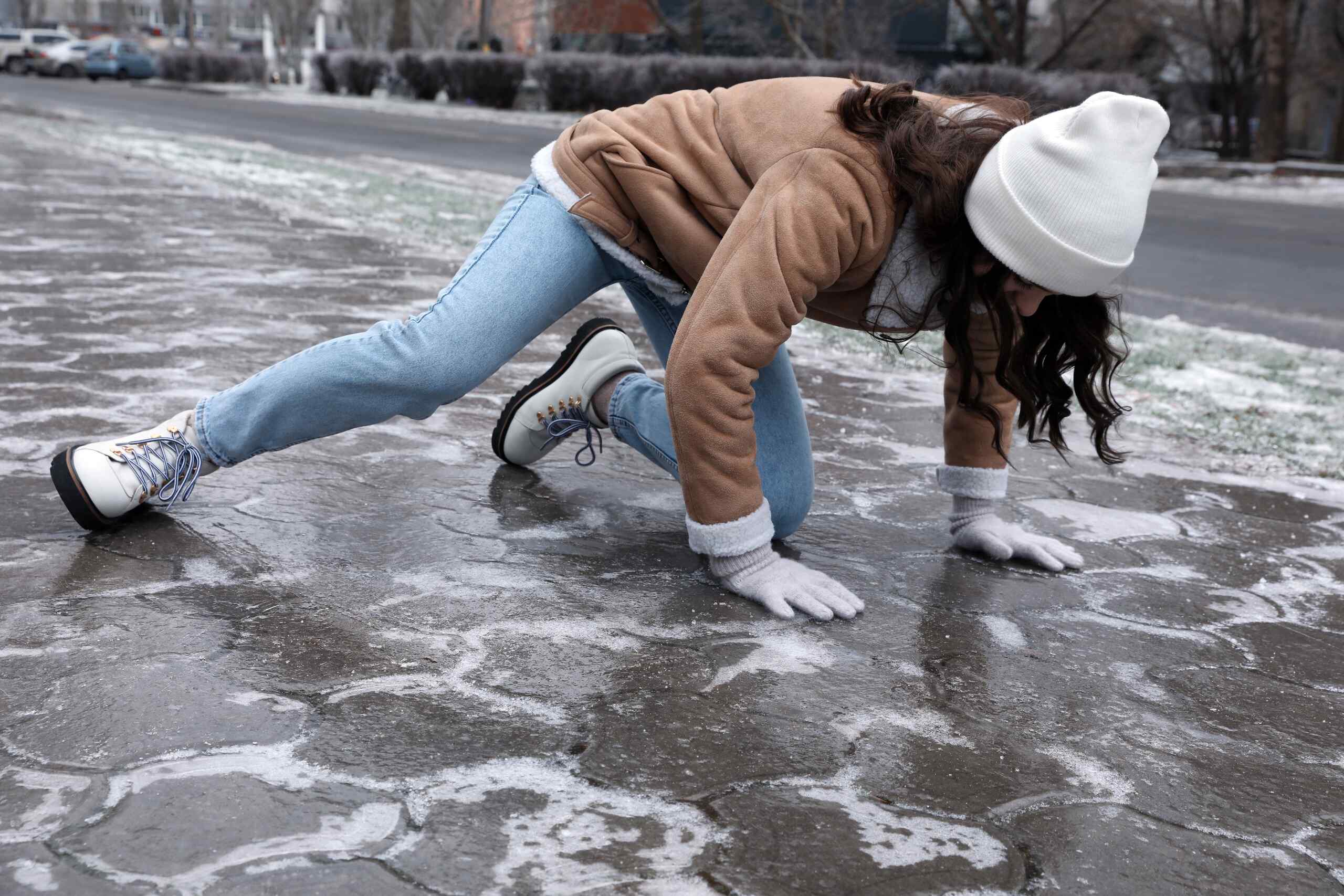
Black ice cases are especially contentious. Because black ice is often invisible, property owners may argue they had no notice of the condition. However, black ice frequently forms due to predictable conditions, such as:
- Daytime melting followed by overnight freezing
- Poor drainage on sidewalks or walkways
- Runoff from roofs or adjacent properties
When black ice results from these recurring issues, it may be considered a known or foreseeable hazard, even if snow or rain is falling at the time of the accident.
Why Do Insurers Rely Heavily on This Defense?
The storm in progress defense is attractive to insurers because it can dispose of a case early, without addressing:
- The severity of the injury
- The history of the property
- Maintenance practices
- Prior complaints of similar accidents
As a result, insurers often raise this defense broadly, even when evidence suggests the condition was not storm-related. Challenging this defense requires more than testimony—it requires documentation, weather analysis, and a careful reconstruction of events. This is where a dedicated slip and fall law firm can be your best ally and protect your rights.
What Evidence Matters Most in Storm in Progress Cases?
Because timing is everything in a winter storm-related fall claim, the most important evidence often includes:
- Exact time of the fall
- Photographs or video of the condition
- Surveillance footage
- Weather station data
- Temperature records
- Prior maintenance or plowing logs
- Witness observations
The sooner this evidence is identified and preserved, the stronger the case may be. Once you partner with a New York personal injury law firm, they can begin the process of gathering and preserving this important legal proof to build your claim for compensation.
Why These Cases Require Detailed Legal Analysis
Winter slip and fall cases are rarely straightforward. A single issue—when the fall happened—can determine whether a property owner had a duty at all.
Determining whether a storm was truly “in progress,” whether the ice was preexisting, and whether the property owner had a reasonable opportunity to act requires careful legal and factual analysis. Assumptions based on what the weather “felt like” are often unreliable. The law looks at what actually happened.
Frequently Asked Questions About the Storm in Progress Defense
Can I sue if I slipped on ice while it was still snowing?
Sometimes, but it depends on what caused the ice. If the dangerous condition existed before the storm, the storm in progress defense may not apply.
Does any precipitation count as a storm?
Not necessarily. Courts examine the nature, timing, and intensity of the precipitation, not just whether it was raining or snowing at the time of your fall.
What if the storm had stopped earlier that day?
If the storm had ended and the property owner had a reasonable time to address the condition, the defense may not apply. A skilled injury attorney can review the evidence and apply the law to determine whether you have a strong argument that the property owner had a reasonable time to remove the hazard.
Does the 4-hour rule automatically mean I win my case?
No. The rule is relevant, but civil liability depends on a broader analysis of reasonableness and timing. This is a great question to ask a knowledgeable slip and fall lawyer during a free consultation.
What if the ice was caused by poor drainage or refreezing?
Those conditions may point to preexisting hazards rather than storm-related accumulation, which can weaken the defense. Proving a preexisting condition can help support a claim for compensation to cover your fall-related losses.
Speak With an NYC Slip and Fall Lawyer at Omrani & Taub About Your Winter Accident Today
Winter slip and fall accidents are often dismissed too quickly as “it was just bad weather.” But New York law draws important distinctions between ongoing storms and preexisting hazards.
If you were injured in a fall involving snow or ice, speaking with a personal injury lawyer at The Law Offices of Omrani & Taub, P.C. can help clarify whether the storm in progress defense truly applies—or whether the property owner may still be responsible for your injuries.
Our team offers free consultations and bilingual assistance to help injured individuals understand how New York law applies to their situation. Call 1-800-JUSTICE® to get clear answers about your rights and options so you can take the next step with confidence.