
New York Truck Accident Lawyer




CASE RESULTS

$10,581,576
MILLION
Guaranteed lifetime payment secured for an eleven-year-old girl from the Caribbean who was seriously injured after being struck by a van while crossing the street. The client sustained a fracture of the left wrist and underwent surgery to her knee and lower back.
A collision with a commercial truck can change your life in seconds. Tractor-trailers and other large semi trucks carry enormous weight, have wide blind spots, and require longer stopping distances, so when something goes wrong on a New York roadway, the consequences are often severe or catastrophic.
If you were injured in a crash involving a tractor-trailer, delivery truck, box truck, dump truck, or other commercial vehicle, you may be asking:
- Who is actually responsible—the driver, the trucking company, the broker, or all of them?
- How do I prove what happened if the company is already investigating and cleaning up after the crash?
- What should I do right now to protect my health and my claim?
At The Law Offices of Omrani & Taub, P.C., our New York truck accident lawyers represent New Yorkers hurt in serious truck accidents across NYC and the surrounding area. We focus on careful investigation, strong documentation, and clear communication, so you always know what to do as bills pile up and the insurance company pushes a quick, low settlement.
Call 1-800-JUSTICE® now for a free consultation to have all your questions answered and learn about your specific legal rights and options.
Why New York Truck Accident Cases Differ From Typical Car Accidents
Many people assume a truck accident claim works like a standard auto fender-bender. In reality, these cases are typically more complex because:
- There may be multiple responsible parties (driver, trucking company, shipper, freight broker, maintenance provider, and more).
- Commercial insurance policies are larger and more aggressively defended.
- Critical evidence can disappear quickly (black box/ECM data, dash cam footage, dispatch records).
- Federal and state safety regulations may affect who can be held liable (FMCSA rules, inspection standards, hours-of-service limits).
Our New York truck accident lawyers are prepared to move quickly on your behalf—because trucking companies often begin building their defense immediately.
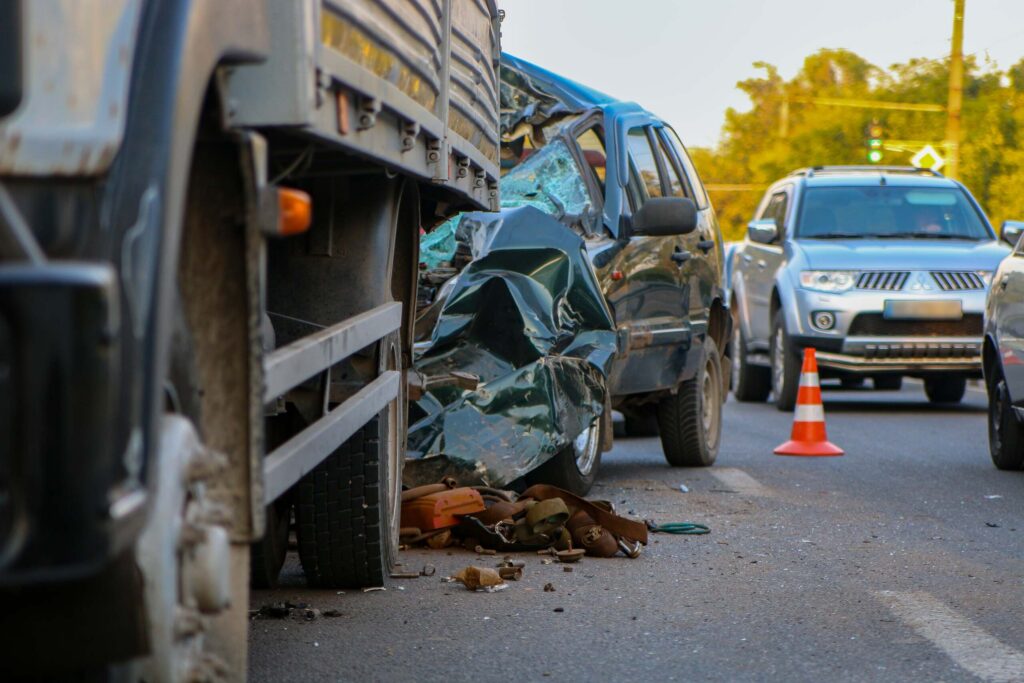
What to Do After You’re Home and Recovering From a Tractor-Trailer Crash
You need to know your next steps after a New York truck accident.
After you receive medical care and the initial shock wears off, new questions may arise:
- How will you afford follow-up treatment?
- How much time will you miss at work?
- Do you have to answer insurance calls?
- What happens next?
At this stage, you can protect both your recovery and your legal options if you:
Continue medical care and follow-up treatment
Attend all follow-up appointments, physical therapy, and specialist visits recommended by your doctors. Even if symptoms feel manageable now, gaps in treatment can affect both your health and how insurers later evaluate your claim.
Seek legal help so the process is not overwhelming
Recovering from a truck accident is physically and emotionally demanding. You don’t need to manage paperwork, deadlines, and evidence on your own. When you partner with our legal team, we can step in to handle those issues—so you can focus on healing and getting your life back on track.
Organize accident-related documents
As you recover, gather and keep copies of medical records, discharge paperwork, prescriptions, bills, and any correspondence related to the crash. If you were given a police report number, share it with our legal team so we can request it on your behalf.
Preserve photos, videos, and personal notes
If you or a family member took photos or videos at the scene or shortly after the crash, save them in a secure place. Writing down what you remember—how the crash happened, what the truck was doing, how your injuries have affected daily life—can also be helpful while details are still fresh.
Be cautious with insurance communications
It’s common for insurance adjusters to reach out after you’re home. You may provide basic information, but you are not required to give recorded statements or speculate about fault, injuries, or recovery timelines. The insurance company can take what you say out of context later.
Instead, refer all insurance inquiries to our team. We can act as your shield against aggressive adjuster tactics and ensure your rights are protected from the start.
Act quickly to preserve trucking crash evidence
Even after you’re home, time is still critical in truck accident cases. Electronic data, dash cam footage, and black box (ECM) information may be overwritten or deleted if no formal preservation request is made. We can send a preservation (spoliation) letter, which can be an important step in protecting this evidence.
Common Causes of Truck Accidents in NYC and Throughout New York
Truck crashes often stem from preventable safety negligence. Common causes include:
Driver fatigue and hours-of-service violations
Commercial drivers may be pressured to meet unrealistic schedules. Fatigue can slow reaction time and lead to lane departures, rear-end crashes, and missed hazards.
Distracted or impaired driving
Phone use, navigation screens, and even dispatch systems can distract a driver. Impairment, whether from alcohol, drugs, or certain medications, can also cause a catastrophic wreck involving a large truck.
Speeding and unsafe following distance
Tractor-trailers need significantly more space to stop. Tailgating is especially dangerous in dense NYC traffic.
Improper lane changes and blind-spot crashes
Large trucks have dangerous blind spots on both sides and directly behind the trailer. Unsafe merges can crush a smaller vehicle or force it to perform evasive maneuvers.
Overloaded or improperly secured cargo
Cargo shift can cause rollovers, jackknifes, and loss of control. Certain loads also require special handling, securement, and inspection.
Mechanical failures and poor maintenance
Brake failure, tire blowouts, steering defects, and lighting failures may result from negligent maintenance, rushed inspections, or defective parts.
Illegal truck routes on NYC parkways
New York’s parkways were not designed for commercial traffic. When a truck ends up on a parkway with low bridges, the risk of bridge strikes, sudden stops, and multi-vehicle pileups increases dramatically.
Who Can Be Held Liable in a New York Truck Accident?
One reason these claims are often undervalued early is that victims assume they can hold only the driver responsible. In many cases, liability extends further and may include:
The truck driver
Drivers can be responsible for negligence, such as speeding, unsafe lane changes, fatigue, distraction, or violations of basic safety rules.
The trucking company (motor carrier)
Even if the driver made the mistake, the company may be responsible for:
- Negligent hiring, training, or supervision,
- Unsafe scheduling that encourages violations,
- Failure to maintain the truck,
- Dispatch practices that put profits over safety.
Freight brokers and logistics companies
This is a growing area of litigation. In some cases, freight broker liability in NY may apply when a broker hires a carrier with a known history of safety problems or fails to use reasonable care in selecting the company transporting the load.
Shippers and loading companies
If cargo was improperly loaded or secured, the shipper or a third-party loading company may share responsibility.
Maintenance providers and parts manufacturers
If a defect or maintenance failure contributed to the crash, such as faulty brakes, tires, underride guards, or steering components, additional parties may be liable.
A strong truck accident case often requires investigating the entire chain of events behind the truck, not just the driver.
What Evidence Can Help Me Win My Truck Accident Case?
Truck claims often turn on evidence that does not exist in ordinary car crashes. A New York truck accident lawyer may request evidence from potential defendants, including:
Black box / ECM (Electronic Control Module) data
This can show speed, braking, throttle, and other details around the time of impact.
Dash cam and surveillance video
Many fleets use outward-facing and inward-facing cameras. Nearby businesses, DOT cameras, or residential systems may also have footage, but it may be overwritten quickly.
ELD and logbook data
Electronic Logging Device records can help confirm hours-of-service compliance, driving time, and rest periods.
Dispatch communications and delivery schedules
Texts, messages, and route instructions can reveal pressure to speed or drive fatigued.
GPS and route history
GPS can show where the truck went, how long it stopped, and whether it used a prohibited route.
Maintenance and inspection records
Patterns of missed inspections, brake issues, tire problems, and prior violations can support negligence claims.
FMCSA and DOT safety history
The Federal Motor Carrier Safety Administration regulates records, inspections, citations, and prior crash history for trucking companies, which may reveal risks the company ignored.
Because some of this evidence can disappear fast, taking early action to preserve this evidence is essential.
Why a Preservation Letter Can Matter Immediately After a Crash
Trucking companies may have retention policies that allow certain electronic data and video to be overwritten. A formal preservation letter (often called a spoliation letter) puts the company on notice and demands that it preserve evidence throughout the litigation process.
This letter may request preservation of:
- ECM/black box downloads,
- Dash cam footage,
- GPS route history,
- ELD and hours-of-service logs,
- Maintenance records,
- Inspection reports,
- Driver qualification and training files,
- Dispatch communications.
Even when a company eventually produces records, the question is whether the most important data still exists. Acting quickly helps protect your ability to prove what really happened.
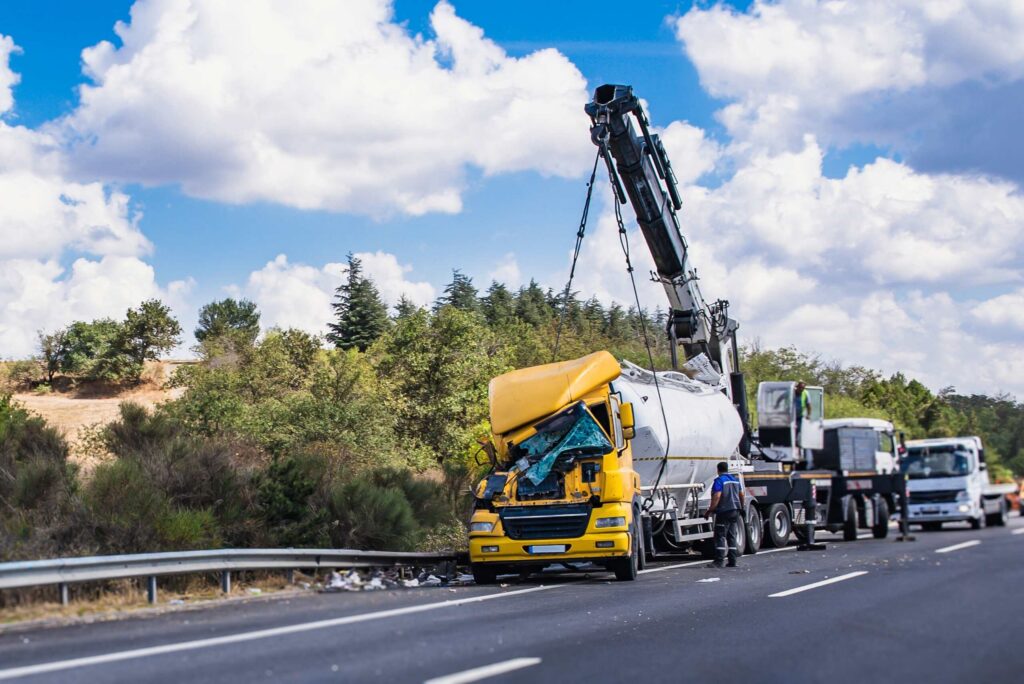
Injuries We Commonly See in Commercial Trucking Accidents
Truck collisions often cause severe injuries that require long-term treatment, including:
- Traumatic brain injury (TBI) and concussions
- Spinal cord injuries and paralysis
- Herniated discs and serious back injuries
- Fractures and crush injuries
- Internal bleeding and organ damage
- Severe lacerations and scarring
- Amputations
- Psychological trauma, including anxiety and PTSD
Even if you think your pain is not “serious enough,” it’s still worth getting evaluated. Many injuries—especially head, neck, and spine injuries—can be masked by adrenaline and become more debilitating over time.
Compensation in New York Truck Accident Cases
Every case is different. In general, compensation in a truck accident claim may include:
Economic damages
- medical bills (past and future),
- rehabilitation and therapy,
- lost wages and diminished earning capacity,
- out-of-pocket costs (transportation, home modifications, equipment).
Non-economic damages
- pain and suffering,
- loss of enjoyment of life,
- emotional distress (in appropriate cases).
Wrongful death damages
If a family member died in a truck crash, the estate may be able to recover funeral costs, last medical expenses, and lost financial contributions, as permitted under New York law.
Because New York has a no-fault system for motor vehicle accidents, the right to pursue certain damages may depend on the facts and whether the injuries are classified as serious. A careful review of medical records and crash circumstances matters.
Important Deadlines That Can Affect Truck Accident Claims in New York
Deadlines can destroy an otherwise strong case, especially in claims involving public vehicles or government entities.
- Personal injury lawsuits are generally subject to a three-year statute of limitations in New York.
- Wrongful death claims generally have a shorter deadline (commonly two years from the date of death).
- Claims involving a city, county, public authority, or other public entity may require a Notice of Claim within a much shorter window (often 90 days), and the lawsuit deadline can be shorter as well.
These rules have exceptions and nuances. If a municipal vehicle was involved (a sanitation truck, city bus, or public works vehicle), you should speak with counsel immediately.
How the Truck Accident Lawyers at Omrani & Taub Approach Truck Accident Cases
A trucking accident claim is only as strong as the investigation behind it. Our approach is built around a few core priorities:
Fast evidence preservation
We take steps early to identify and preserve critical electronic and documentary evidence.
Detailed liability analysis
We look beyond the obvious—examining the trucking company, broker relationships, maintenance records, route restrictions, and safety history.
Medical documentation that supports your real-world harm
We help you build a claim that reflects the full impact on your life, work, and future—not just a snapshot of the first ER visit.
Clear communication
You deserve to understand what’s happening in your case. We will keep you informed, explain your options, and help you make decisions with confidence.
Trial-ready preparation
Most cases settle, but not every insurer negotiates fairly unless they know you’ll litigate. We prepare every case for trial, ready to present your claims to a jury if necessary to protect your legal rights.
Frequently Asked Questions About Truck Accidents in New York
Do I really need a New York truck accident lawyer if the fault seems obvious?
Even when fault feels clear, trucking insurers often dispute liability, minimize injuries, or try to shift blame. A lawyer can help protect evidence, identify all responsible parties, and prevent avoidable mistakes early in the claim. If the insurance company refuses to pay a fair amount, you need skilled injury attorneys to advocate for you at trial.
What if the truck driver says I caused the accident?
Conflicting statements are common. That’s why electronic evidence—black box/ECM data, dash cam video, GPS, and ELD logs—can be so important. An independent investigation can uncover facts that don’t appear in the initial narrative.
Can I sue the trucking company even if the driver is an independent contractor?
Possibly. The answer depends on the relationship and the facts. Even when a company labels a driver or carrier as “independent,” liability may still exist through negligent hiring, negligent supervision, unsafe practices, or other legal theories.
What is a truck underride accident?
An underride accident occurs when a smaller vehicle drives underneath the trailer of a large truck, typically in a rear-end or side-impact collision. Because the passenger vehicle’s safety features, such as airbags and crumple zones, bypass the trailer, these crashes can result in catastrophic injuries like decapitation or severe brain trauma.
Federal regulations require rear underride guards, but not side underride guards.
Our New York truck accident lawyers thoroughly investigate underride accidents, focusing on the truck’s speed, the guard’s integrity, and federal safety compliance to build your case.
What is the typical timeline for a New York truck accident claim?
Every truck accident case differs, and there is no set timeline. Cases move at different speeds depending on the severity of your injuries, the complexity of evidence, and the willingness of the trucking company and its insurer to negotiate a fair settlement.
While we push to resolve your case as efficiently as possible, a complex truck accident claim involving serious injuries often requires detailed investigation, discovery, and litigation, which can take time.
We never rush your case simply to meet a deadline. We ensure the result fully compensates you.
Speak With a New York Truck Accident Lawyer at Omrani & Taub To Learn More Todayng Text Here
If you or a loved one was injured in a truck or tractor-trailer accident, you deserve clear answers and a legal team that takes your case seriously from day one.
The Law Offices of Omrani & Taub, P.C. offers free consultations and bilingual support. We’ll listen to what happened, explain what evidence matters, and outline next steps—so you can move forward with clarity.
Call 1-800-JUSTICE® to request a free case evaluation now.
Call 212-714-1515 Today
For A Free Consultation