
In a New York personal injury lawsuit, it is not enough to say that you were injured. The legal system demands precision. Details. Clarity. One of the most important documents used to achieve this is the Bill of Particulars.
This single document can determine which injuries are legally recognized in your case and which, although they are very real, may be excluded from trial.
Many people never hear this term until their case is already underway. Yet under New York Bill of Particulars law, this document acts as a roadmap that defines the boundaries of the lawsuit. If an injury, symptom, or consequence is not mentioned in it, the court may treat it as if it does not exist.
Below, we explain what a Bill of Particulars is, why it is required in New York, how it can directly affect compensation, and how mistakes in this document can have permanent consequences.
Key Takeaways About the New York Bill of Particulars
- In New York, the Bill of Particulars is a mandatory document in personal injury lawsuits.
- It is governed by CPLR 3043 and details the injuries, damages, and legal theories of the case.
- An injury that is not listed in the Bill may be excluded from trial, even if it is real and medically documented.
- The document may be amended or supplemented, but only under certain conditions.
- A lack of precision can lead to the exclusion of evidence in court.
What Is a Bill of Particulars in New York?
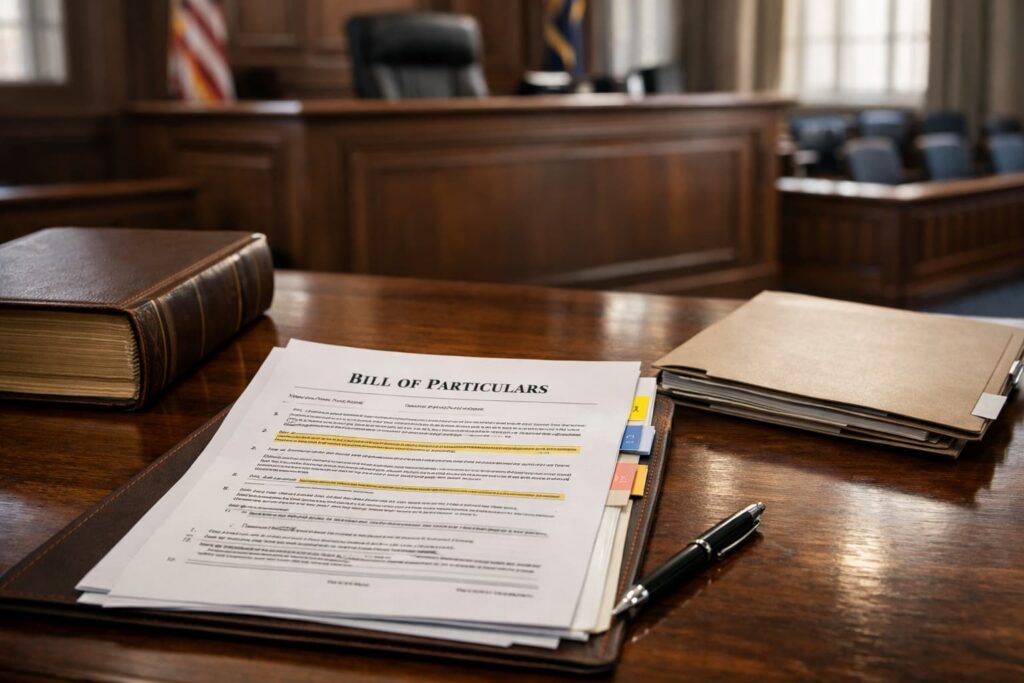
A Bill of Particulars is a formal response that expands upon and details the general allegations made in the initial complaint. In other words, it transforms broad statements such as “serious injuries” into a specific and concrete list of damages.
In New York, this document is required in most personal injury cases once the defendant formally demands it. Its purpose is to prevent surprise and allow both sides to understand exactly what is being claimed.
The law governing this process is CPLR 3043, which outlines the required information and its presentation format. Including necessary information in the proper format is crucial to an injury lawsuit’s success at a formal trial in New York.
When Does the Bill of Particulars Appear in a Case?
In New York, the Bill of Particulars does not appear at the very beginning of a case, but it is also not a minor detail left for the end. It is part of a specific procedural sequence within a personal injury lawsuit, and understanding its placement explains why it is so critical.
Generally, a typical injury case follows this order:
- The accident occurs
- An initial lawsuit is filed (Summons and Complaint)
- The defendant formally demands a Bill of Particulars
- Medical records and documentation are exchanged
- Depositions are conducted
- Motions are filed, and trial preparation begins
The Bill of Particulars is usually required before depositions, and that timing is intentional. This document establishes the framework of the case and becomes the reference point for testimony, medical evidence, and legal arguments that follow.
CPLR 3043 Explained in Plain Language
New York State Unified Court System Rule 3043 (CPLR 3043) requires the plaintiff to disclose key aspects of their case, including:
- The specific injuries suffered
- Whether the injuries are temporary or permanent
- Medical treatment received and anticipated
- Lost income or diminished earning capacity
- Any physical or functional limitations
This level of detail is mandatory. Failure to comply can result in procedural sanctions or the exclusion of evidence later in the case.
How the Defense Uses the Bill of Particulars Strategically
The Bill of Particulars is not just an administrative requirement. It is also a procedural tool that the defense may use strategically during litigation.
For example, the defense may:
- Request that evidence be excluded if an injury was not listed
- Limit testimony from treating doctors or experts
- Narrow the scope of claimed damages
- Point out inconsistencies between the Bill of Particulars document and the plaintiff’s testimony
This is not about “tricks,” but about applying existing procedural rules. That is why every word in the Bill of Particulars matters. A small omission can become a significant limitation later.
Why the Bill of Particulars Is So Important
In practice, the Bill of Particulars defines the scope of the trial. It functions like an implied contract: what is written there is what may be presented to the judge or jury.
That means:
- An omitted diagnosis may not be discussed or considered
- A newly developed symptom may be challenged
- A long-term consequence may be excluded if not properly disclosed
Even if a doctor is prepared to testify about an injury, the court may bar that testimony if the injury does not appear in the Bill of Particulars.
Listing Specific Injuries Sustained in Your Lawsuit is More Than Just a Formality
Some people assume it is enough to mention “pain” or “back injuries.” In reality, listing injuries in a New York personal injury lawsuit requires both medical and legal precision.
Examples of detailed injury descriptions include:
- Specific disc herniations by spinal level
- Nerve damage
- Secondary neurological symptoms
- Chronic pain or post-traumatic conditions
- Progressive functional limitations
Each element must be properly described to preserve the right to present it at trial.
Why Medical Records Do Not Replace the Bill of Particulars
A common misconception is that medical records “speak for themselves” and that if an injury appears in a medical report, it automatically becomes part of the case. In New York, that is not true.
Courts do not treat medical records as a substitute for the Bill of Particulars. Even if an MRI shows a disc herniation or a report confirms neurological damage, the injury must be specifically listed in the Bill of Particulars to be presented at trial.
From a procedural standpoint:
- The Bill of Particulars defines which injuries are legally claimed
- Medical records serve as evidence, not allegations
- An unlisted injury may be excluded, even if well documented
This technical distinction is one of the most common traps for those unfamiliar with New York civil procedure.
| Key Aspect | Bill of Particulars | Medical Records |
| Legal function | Defines which injuries are legally claimed in the lawsuit | Documents diagnosis, treatment, and medical history |
| Part of the legal pleadings? | ✅ Yes | ❌ No |
| Defines what may be presented at trial | ✅ Yes | ❌ No |
| Can exclude injuries if not included | ✅ Yes | ❌ No |
| Can limit medical testimony | ✅ Yes | ❌ No |
| Can be used strategically by the defense | ✅ Yes | ⚠️ Only as supporting evidence |
| Replaces the other document | ❌ No | ❌ No |
| Risk if information is missing | Evidence preclusion; exclusion of claimed damages | Incomplete or insufficient proof |
| Who controls it | Attorneys (procedural/legal control) | Doctors and healthcare providers |
The Risk of Late-Developing Injuries or Sequelae
Many injuries do not appear immediately. Some worsen over time. Others result in unexpected sequelae, which are essentially conditions that arise as a consequence of an injury months later.
The problem arises when a new symptom is not properly included in an amended or supplemental Bill of Particulars. In that situation, the opposing party may seek to exclude it.
This can affect:
- Pain and suffering damages
- Future medical expenses
- Claims of permanent disability
Can a Bill of Particulars Be Amended After It Is Filed?
Yes—but not automatically. Amending a Bill of Particulars is allowed under certain conditions, generally when:
- New information emerges during discovery
- There is no undue prejudice to the opposing party
- The amendment is sought within a reasonable time
However, New York courts may deny late amendments, especially when the case is close to trial. A skilled New York personal injury attorney should take steps to properly update the Bill of Particulars with the most recent information, injuries, and conditions before trial to ensure all medical evidence and losses are considered by the court or jury.
How Judges Decide Whether to Allow a Late Amendment
When permission is requested to amend a Bill of Particulars, courts do not take the decision lightly. In New York, judges consider multiple factors, particularly when the case is nearing trial.
Common considerations include:
- Whether the defendant would have a fair opportunity to investigate the new allegation
- Whether the original omission was reasonable or avoidable
- How much time has passed since the case began
- How close the case is to trial
- Whether allowing the amendment would cause unfair prejudice
Even legitimate injuries may be excluded if the court finds the update comes too late. Timing and diligence matter just as much as accuracy.
Supplemental Bill of Particulars: What It Means
A supplemental Bill of Particulars is used to update previously disclosed information, such as:
- Additional medical treatment
- Changes in prognosis
- Recent surgeries
- Later-confirmed diagnoses
This document does not replace the original. It supplements it. Even so, it must comply with procedural rules and be submitted in a timely manner.
Preclusion of Evidence: The Most Serious Consequence
One of the most significant procedural risks is the preclusion of evidence. Simply put, it means the judge may prohibit certain evidence from being presented at trial.
In New York, this can occur when:
- An injury was not included in the Bill of Particulars
- The defense did not have an opportunity to investigate
- The omission is deemed unfair or prejudicial
Preclusion can seriously weaken a case, even when liability is clear. It can also reduce the legal damages (financial losses) the plaintiff can request if supporting evidence is excluded during the trial.
How the Bill of Particulars Affects Settlement Negotiations
This document matters not only at trial. It also directly influences:
- Insurance evaluations
- Settlement offers
- Mediations
- Overall case valuation
A detailed and well-drafted Bill of Particulars should reflect the true extent of harm. An incomplete Bill can minimize the injuries and losses being sought.
Common Mistakes Related to Bills of Particulars That Can Be Costly to an Injured Plaintiff
Some of the most frequent errors involving Bills of Particulars include:
- Using generic descriptions
- Failing to update the Bill to add new injuries
- Omitting secondary symptoms
- Delaying necessary amendments
- Failing to coordinate with medical reports
These mistakes are often difficult to fix later. Choosing an experienced New York injury lawyer can help you file all necessary documents and preserve your legal rights throughout your lawsuit.
Warning Signs That Can Impact a Bill of Particulars and Should Not Be Ignored
Although every case is different, certain warning signs may indicate that a Bill of Particulars does not fully reflect the reality of an injury.
Common red flags include:
- Receiving a new diagnosis that has not been legally documented
- Testifying under oath about symptoms not listed in the Bill of Particulars
- Changes in medical treatment without procedural updates
- Major surgeries or recommendations close to trial
- Generic descriptions that do not reflect the true severity of the injury
Identifying these issues early can make a meaningful difference in how a case develops.
Frequently Asked Questions About the Bill of Particulars in New York
Is a Bill of Particulars the same as the complaint?
No. The complaint initiates the case with general allegations. The Bill of Particulars details those allegations and defines their scope.
What happens if an injury appears after the Bill of Particulars is filed?
A supplemental or amended Bill of Particulars may be required, provided it is done in a timely manner.
Can a judge reject an amendment?
Yes—especially if the court finds that the other party would be unfairly prejudiced or that there was unjustified delay.
Does this requirement exist in other states?
Not in the same way. The Bill of Particulars is a distinctive feature of New York civil procedure.
Why is this document so technical?
Because it balances the plaintiff’s right to present a case with the defendant’s right to know exactly what is being claimed.
Speak With the Attorneys at Omrani & Taub Before a Detail on a Bill of Particular Defines Your Case
In New York, procedural details matter. An omitted diagnosis, an unlisted subsequent related condition, or a late update can severely limit what may be presented at trial.
If you or a loved one is involved in a personal injury lawsuit, understanding how the Bill of Particulars works can make the difference between a complete case and an incomplete one. The Law Offices of Omrani & Taub, P.C. offers free consultations and bilingual services to help injured individuals understand the New York legal process and protect their rights.
Call 1-800-JUSTICE® to learn more. Our legal professionals have been fighting for injured people in New York for decades. We can answer your questions and explain how we can help during a free, no-obligation consultation today.