

After a serious commercial truck accident in New York, many injured people assume that the only responsible party is the driver behind the wheel. That assumption feels logical: it was the truck that struck you, the driver who made decisions on the road, and the driver’s insurance policy that usually applies first.
But in many cases, the structure of potential responsibility behind the truck crash is far more complex.
Modern freight transportation often relies on freight brokers and logistics companies that arrange shipments, select carriers, and—at least in theory— influence which trucks and drivers are allowed on the road. These companies are often invisible to the public, yet they may share liability for a collision and, more importantly, have financial resources that far exceed those of the individual driver.
The key question becomes: can an injured person pierce the corporate veil to sue the freight broker or logistics company, not just the truck driver?
In certain cases, the answer may be yes.
Key Takeaways About Freight Broker Liability in New York
- Freight brokers and logistics companies may face legal liability for trucking accidents under specific circumstances.
- The legal theory of negligent hiring may apply when a broker selects an unsafe carrier.
- Brokers often carry insurance policies far larger than a driver’s individual coverage.
- Proving broker liability requires examining hiring practices, safety records, and regulatory compliance.
- In some cases, suing the broker is essential to pursuing full and fair compensation.
Who Is the Freight Broker and What Do They Really Do?
In modern commercial transportation, a freight broker acts as an intermediary between the company shipping goods and the motor carrier that physically transports them. Although the broker usually does not own the truck or directly employ the driver, it often makes decisions that can directly affect public safety.
Those decisions often include:
- Which carrier is selected for the job
- How quickly the shipment must be completed
- What safety standards are required
- Whether the carrier’s safety history is reviewed
- Whether cost is prioritized over compliance and safety
In practice, many brokers handle high volumes of freight daily and rely on independent carriers to meet tight delivery deadlines.
The Problem With Assuming That Only the Driver Is Responsible
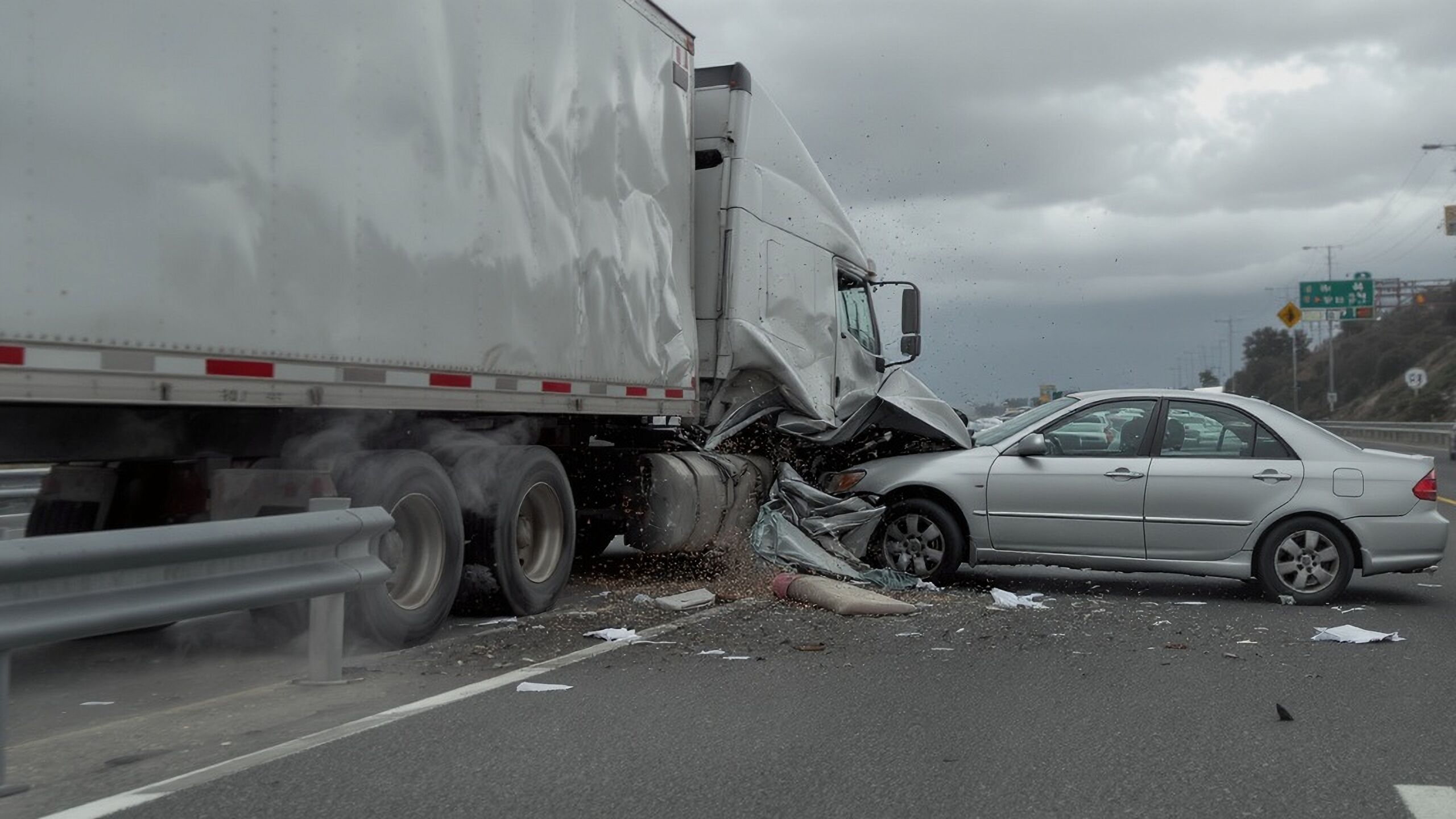
After a crash, insurance companies often focus attention on the truck driver and that driver’s policy, which is frequently capped at around $1 million. In catastrophic accidents, that amount may be insufficient to cover financial losses experienced by an accident victim, including:
- Extensive medical treatment
- Future surgeries
- Long-term rehabilitation
- Permanent loss of earning capacity
- Pain and suffering damages
Meanwhile, the logistics company that arranged the shipment may carry tens of millions of dollars in coverage, yet remain outside the case if its role is never examined.
Piercing the Corporate Veil: What It Means in Truck Accident Cases
“Piercing the corporate veil” does not mean automatically ignoring corporate structures and liability protections. It means examining whether a company that claims no responsibility for the accident actually played a negligent or active role in creating the risk.
In truck accident cases, this often involves analyzing whether the broker:
- Knew or should have known the carrier was unsafe
- Ignored warning signs or red flags
- Failed to review safety records
- Chose low-cost carriers at the expense of compliance
When these facts are present, direct legal responsibility may arise if you can get past the corporate structure to access the company’s coverage.
The Negligent Hiring Theory
One of the most important legal theories for pursuing freight broker liability in NY is negligent hiring. Under this theory, a company may be liable if it hires another party while knowing—or having reason to know—that the party was unsafe or unqualified.
In trucking cases, this may include situations where the broker:
- Selected a carrier with a poor safety record
- Ignored low FMCSA or DOT safety ratings
- Failed to review prior violations or crashes
- Did not verify proper licensing or insurance
- Used “cheap” carriers with risky practices
The focus is not on whether the broker controlled the driver’s every move, but on whether it made a dangerous decision by putting that truck on the road.
Schramm v. Foster and Why It Matters
One frequently cited case in this area is Schramm v. Foster, which examined when a freight broker may be liable for hiring an unsafe carrier.
While every case depends on jurisdiction and specific facts, this theory has influenced how courts evaluate:
- A broker’s duty to investigate
- What information was available before the crash
- Whether a failure to act was reasonable or negligent
In New York, these principles may be relevant when evaluating freight broker liability, particularly when there is documented evidence of prior safety issues.
Discover why sending a spoliation letter after a New York truck accident can be critical to preserving black box data and protecting key evidence.
Why These Claims Are More Complex
Suing a freight broker is significantly more complex than bringing a claim solely against the truck driver. Brokers operate within contractual frameworks designed to distance them from daily driving risks.
These companies often rely on:
- In-house and outside legal teams experienced in limiting exposure
- Arguments that they exercised no direct control over the driver
- Carefully drafted contracts that label the carriers as “independent contractors”
- Narratives portraying the broker as a purely administrative intermediary
- Claims that they owed no direct duty to the public
These cases also frequently require access to internal records not immediately available, such as carrier selection policies, prior hiring decisions, communications, and safety documentation. Obtaining and analyzing this material often involves multiple stages of litigation and a skilled legal team.
For these reasons, claims against brokers are not based on assumptions or company size, but on verifiable facts and concrete documentation showing how a specific business decision contributed to the risk and the crash.
Vicarious Liability vs. Negligent Hiring
To understand how a freight broker may face liability, it is important to distinguish between two related but distinct legal concepts. Vicarious liability applies when a company is legally responsible for the negligent acts of its employees committed within the scope of their work. A direct employment relationship is central to this analysis.
For example, if a driver is an employee of a trucking company and causes a crash while working, the employer may be responsible—even if it played no direct role in the accident.
Negligent hiring, by contrast, focuses on a decision made before the crash. Under this theory, a company may be liable not for controlling the driver, but for selecting an unsafe third party to perform work that posed foreseeable risks to the public.
This distinction is especially important for freight brokers. Drivers are usually not broker employees. Instead, brokers hire independent motor carriers to move freight. Even without an employment relationship, the broker may still have a duty to exercise reasonable care in selecting those carriers.
For example, hiring a carrier with known safety violations, failed inspections, or a history of crashes—without proper review—may constitute negligent hiring. In that situation, liability arises from the business decision that allowed an unsafe truck on the road.
Explore how negligence per se can apply to truck crashes on NYC parkways—and why regulatory violations may significantly impact liability and compensation.
When Suing the Broker Can Be Critical
Focusing only on the driver can present an incomplete picture—and significantly limit recovery options—in certain cases. Broker liability may be especially important when:
- The driver carries only limited insurance coverage
- The accident caused catastrophic injuries such as brain or spinal cord damage
- The carrier has a history of safety violations
- The trucking company is small, unstable, or insolvent
- Logistics decisions were centralized at a large corporate level
In these scenarios, the broker’s role in selecting the carrier, setting deadlines, and prioritizing cost may be essential to understanding how the risk was created. Ignoring that role can leave accident victims with severely restricted compensation options, even when the crash was serious and preventable.
Frequently Asked Questions About Suing Freight Brokers
Can I sue Amazon or a logistics company if a contractor they hired hit me?
In some cases, yes. Liability depends on the role the company played in selecting the carrier and whether there was negligence in that process.
Is the broker always responsible?
No. Responsibility depends on the specific facts and whether the broker failed to exercise reasonable care when hiring the carrier. A dedicated truck accident lawyer can review the facts of your case to determine if you have a viable claim against the broker.
Do I have to prove the broker controlled the driver?
Not necessarily. In negligent hiring cases, the focus is on the hiring decision—not on day-to-day control. Other legal theories might apply as well, so talk to a knowledgeable trucking accident attorney to learn more.
Does this apply only to large companies?
No. Any broker or intermediary may face liability if it acted negligently, regardless of size.
Do these cases take longer to resolve?
They are often more complex, and sorting out the various legal theories can take longer. However, it’s critical to take the time needed to thoroughly investigate the circumstances to accurately determine who may be held responsible and reflect the full scope of the harm suffered.
Why Identifying All Responsible Parties Matters
In truck accident cases, corporate structures can obscure where dangerous decisions were actually made. Limiting the analysis to the driver may leave out key players with greater responsibility—and greater ability to respond to the harm caused.
Exploring broker liability is not about “chasing deeper pockets.” It is about accurately understanding how the crash occurred and who made it possible.
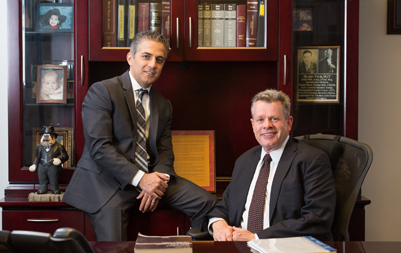
Speak With the Skilled Legal Team at Omrani & Taub Before Limiting Your Options
Truck accidents are rarely simple. Behind a single truck may be a network of corporate decisions that directly impact roadway safety.
If you or a loved one was injured in a truck accident, speaking with our attorneys may help you understand all available legal options—not just the most obvious ones.
The Law Offices of Omrani & Taub, P.C. offers free consultations and bilingual support to help injured accident victims evaluate their situation and protect their rights under New York law.
Call 1-800-JUSTICE® to get answers to your questions and clear information so you can take the next step with clarity and confidence.