
New York DWI Accident Lawyers
New York Personal Injury Attorneys » DWI Accident Lawyer




CASE RESULTS

$10,581,576
MILLION
Guaranteed lifetime payment secured for an eleven-year-old girl from the Caribbean who was seriously injured after being struck by a van while crossing the street. The client sustained a fracture of the left wrist and underwent surgery to her knee and lower back.
Being hit by someone who chose to drink and drive is not an accident you can make sense of, and you should not have to fight an insurance company while you are still healing. Our New York DWI accident lawyers handle the civil claim against the impaired driver and everyone else who helped put them behind the wheel.
Omrani & Taub, P.C. represents injured people and grieving families across Manhattan, Queens, Brooklyn, the Bronx, Staten Island, and Westchester County. The first conversation costs nothing.
The criminal court will deal with the arrest. It will not pay your hospital bills, replace your lost income, or compensate you for what the crash took from your life. That is a separate case, and it is yours to bring.
Call (212) 714-1515 now for a free case review. We answer in English and Spanish, day or night.
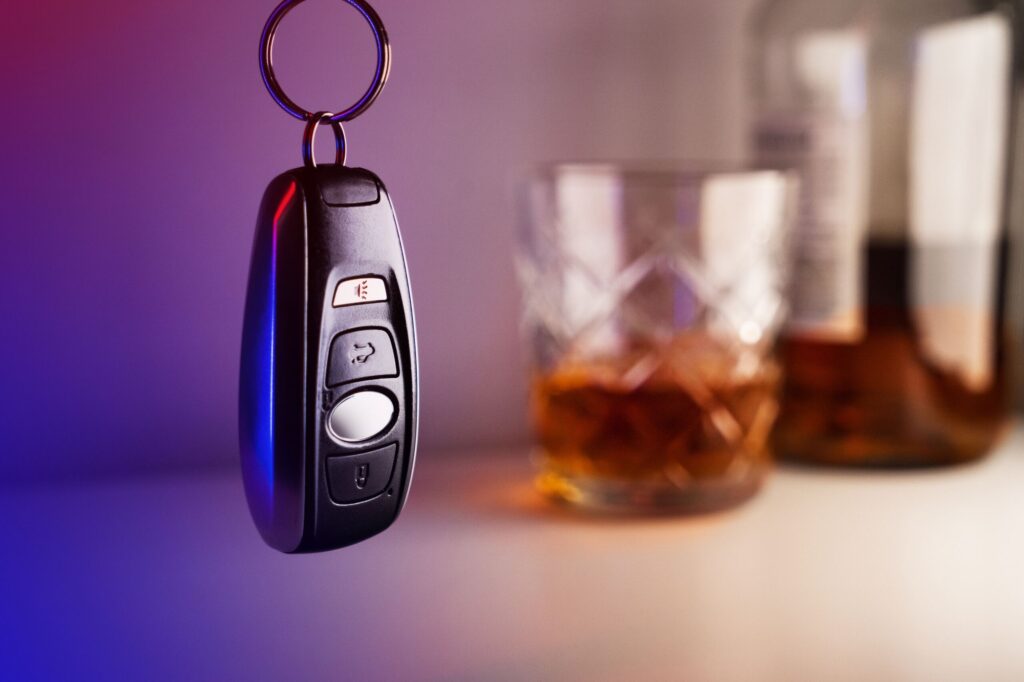
Do You Need a Lawyer If the Drunk Driver Was Already Arrested?
Yes, because the arrest and your compensation are two different cases with two different goals. The District Attorney prosecutes the driver on behalf of the State of New York. No prosecutor represents you, and a conviction does not put money in your pocket. Your civil claim runs on a parallel track. It asks a different question: what did this crash cost you, and who has to pay for it. Restitution ordered in criminal court is usually limited and rarely covers long-term medical care or future lost earnings. Waiting for the criminal case to finish is one of the more expensive mistakes injured people make. Evidence disappears, insurers close files, and deadlines run. The two cases can and should move at the same time.How Does the Criminal Charge Change Your Civil Case?
A criminal conviction can carry real weight in your civil case, but only if the charge was serious enough. Under New York’s collateral estoppel rules, a conviction for a crime can be treated as conclusive proof of the facts the criminal court already decided, which can remove the fight over whether the driver was impaired. New York courts draw the line at the seriousness of the charge. A misdemeanor or felony conviction can carry that effect. A guilty plea to Driving While Ability Impaired, defined in Vehicle and Traffic Law § 1192(1) and classified as a traffic infraction rather than a crime by § 1193(1)(a), usually does not. Even then, the plea is not worthless. New York allows a guilty plea to be introduced as an admission, though the driver gets to explain it to the jury. This is one reason the criminal classification of the DWI affects how the civil case unfolds, and why your lawyer should be tracking the criminal docket from week one.| Criminal outcome | New York classification | Typical civil effect |
|---|---|---|
| DWAI, § 1192(1) | Traffic infraction | Admissible as an admission, driver may explain it |
| DWI, § 1192(2) or (3) | Misdemeanor | Conviction may establish facts already decided |
| Aggravated DWI, repeat DWI, or DWI with a child in the car | Misdemeanor or felony depending on the facts | Same, and often supports a claim for exemplary damages |
Who Else Can Be Held Responsible Besides the Driver?
Often more than one party, which matters when the driver’s insurance is too small to cover your injuries. New York law reaches past the person behind the wheel in several situations.Can You Sue the Bar or Restaurant That Served the Driver?
In many cases, yes. New York’s Dram Shop Act, General Obligations Law § 11-101, gives a right of action against any person who, “by unlawful selling to or unlawfully assisting in procuring liquor for such intoxicated person, have caused or contributed to such intoxication.” The words doing the work are “unlawful selling.” Under Alcoholic Beverage Control Law § 65, a sale is unlawful when it is made to someone under 21 or to a person who is “visibly intoxicated.” Proving visible intoxication means receipts, tabs, video, bartender testimony, and witnesses, gathered quickly before they are gone. The statute also authorizes “actual and exemplary damages,” which is a punitive component written directly into the law. One limit worth knowing: the intoxicated drinker cannot sue the bar. This claim belongs to the people they hurt.What About a Private Party or a Host?
New York’s social host statute is narrower than most people assume. General Obligations Law § 11-100 applies when someone knowingly furnishes alcohol to a person under 21, with reason to believe they were under 21. There is no general social host liability in New York for serving a visibly intoxicated adult guest. If the drinker was underage, the analysis changes completely, and the host may be on the hook.Other Parties We Look For
- The registered owner of the vehicle, who can be vicariously liable for a permissive driver’s negligence under Vehicle and Traffic Law § 388
- An employer, if the driver was working, running an errand, or driving a company vehicle
- A commercial venue’s insurer, which often carries far higher limits than a personal auto policy
- A municipality, if a road defect, missing signage, or a dangerous design contributed to the crash
- A rideshare or delivery company, when the impaired driver was logged into a platform at the time
What Compensation Can You Recover After a Drunk Driving Crash?
New York lets you pursue your out of pocket losses plus your human losses, and in some impaired driving cases a punitive award in addition. The categories break down like this. Economic losses. Emergency and follow-up medical care, surgery, rehabilitation, medication, assistive equipment, home modifications, past and future lost earnings, reduced earning capacity, and household services you can no longer perform. Non-economic losses. Pain, permanent limitation, disfigurement, scarring, loss of the activities that made your life yours, and the strain a serious injury puts on a marriage. Exemplary and punitive damages. New York courts allow punitive damages in drunk driving cases, but intoxication by itself is not enough. Appellate decisions require additional wanton or reckless conduct evaluated case by case, taking into account the nature of the conduct and the level of intoxication. The Dram Shop Act is different, because it authorizes exemplary damages by statute.Why the No-Fault System Does Not End Your Claim
New York is a no-fault state, and that confuses people into thinking they cannot sue. Your own no-fault benefits pay medical bills and part of your lost wages first, regardless of fault. To recover for pain and suffering from the drunk driver, you must meet the “serious injury” threshold in Insurance Law § 5102(d). That definition includes death, dismemberment, significant disfigurement, a fracture, loss of a fetus, permanent loss of use, permanent consequential limitation, significant limitation of use, and an injury that keeps you from substantially all of your usual activities for 90 of the 180 days after the crash. That last category, the 90/180 rule, is how many soft tissue and nerve injury cases clear the threshold. Documenting it takes consistent treatment records and a paper trail from your employer, and it is worth building from the first week.What If the Drunk Driver Only Had Minimum Insurance?
Then the search shifts to other policies. New York’s minimum liability limits are lower than most injured people expect. According to the New York State Department of Motor Vehicles, a policy must carry at least $25,000 for bodily injury and $50,000 for death per person, $50,000 for bodily injury and $100,000 for death where two or more people are hurt, and $10,000 in property damage. A single night in a trauma bay can exhaust that. Additional recovery often comes from these sources.| Source of recovery | Where it comes from | Why it matters in a DWI case |
|---|---|---|
| Your own SUM coverage | Supplementary uninsured/underinsured motorist coverage on your policy, Insurance Law § 3420(f)(2-a) | New policies default to SUM equal to your own liability limits unless you elected lower amounts in writing |
| Dram Shop claim | Commercial liquor liability policy | Bars and restaurants often carry far higher limits than the driver |
| Vehicle owner’s policy | VTL § 388 vicarious liability | Reaches a parent, a friend, or a rental or fleet owner |
| Employer coverage | Commercial auto or general liability | Applies when the driver was on the clock |
| Umbrella policy | Personal excess coverage | Common where the at-fault driver has assets |
How Long Do You Have to Sue a Drunk Driver in New York?
Three years for most personal injury claims, and less in several common situations. Missing one of these deadlines can end an otherwise strong case, so calendar them now.| Deadline | Time limit | Authority |
|---|---|---|
| No-fault notice to your insurer | 30 days from the crash | 11 NYCRR 65-1.1 |
| Medical bill submission | 45 days from treatment | 11 NYCRR 65-1.1 |
| Wage loss and other expenses | 90 days from the loss | 11 NYCRR 65-1.1 |
| Notice of claim against a city, town, or public authority | 90 days | General Municipal Law § 50-e |
| Suit against a municipality | 1 year and 90 days | General Municipal Law § 50-i |
| Personal injury lawsuit | 3 years | CPLR § 214(5) |
| Wrongful death lawsuit | 2 years from the date of death | EPTL § 5-4.1 |
Does Sharing Any Fault Stop You From Recovering?
No. New York uses pure comparative negligence, which is one of the most forgiving rules in the country. CPLR § 1411 provides that a claimant’s own culpable conduct “shall not bar recovery,” and instead reduces damages in proportion to that conduct. There is no percentage cutoff. A person found 60 percent at fault still recovers 40 percent of their damages. Insurers know this, which is why they push fault onto injured people early, often during a recorded statement taken in a hospital bed. You are not required to give the other driver’s insurer a statement. Declining one is not suspicious, and it is frequently the right call.How Do Insurance Companies Fight Drunk Driving Claims?
They rarely argue the driver was sober. Liability is often clear in these cases, so the insurer moves the fight to how badly you were hurt and what that is worth. The four moves we see most often in New York impaired driving claims: A fast, low offer while you are still in treatment. It arrives before anyone knows whether you need surgery. Accepting it closes the claim permanently, including the part you have not discovered yet. A threshold attack. The carrier concedes the crash and then argues your injuries do not meet the serious injury standard in Insurance Law § 5102(d). Gaps in treatment are the ammunition, which is why staying with your care plan matters legally as well as medically. A defense medical examination. Their doctor examines you once, briefly, and writes a report describing you as recovered. We prepare clients for these appointments and obtain the examining physician’s prior reports and testimony. Social media and surveillance. Photos of you at a birthday party get offered to a jury as proof you are fine. Locking down your accounts early is one of the cheapest protective steps available to you. Handling these moves is routine work for a lawyer and unfamiliar territory for an injured person. Recognizing them early is the point of having counsel. Do not negotiate alone with the insurer. Call (212) 714-1515 for a free case review first.What Does a DWI Accident Lawyer Cost in New York?
Nothing up front. We work on a contingency fee, which means our legal fee comes as a percentage of the recovery, and there is no attorney’s fee unless we obtain compensation for you. The consultation is free and carries no obligation. If we take the case, we advance the costs of investigation, records, and the professionals we retain, and those advanced costs are repaid out of a recovery. We explain the full fee and cost arrangement in writing before you sign anything.Why Do Injured New Yorkers Choose Omrani & Taub?
Because we have been trying injury cases in these courthouses since 1998, and because our clients can speak to us in their own language. The firm was founded that year and has recovered hundreds of millions of dollars for clients across New York. Experience in the courts where your case will be heard. Our attorneys litigate in the state courts of New York City and Westchester County, and in the federal Southern, Eastern, and Western Districts of New York. Senior partner Alex A. Omrani has been admitted in New York since 1998. Founding partner Michael A. Taub serves as President of the Brooklyn-Manhattan Trial Lawyers Association and is a member of the New York State Trial Lawyers Association. A team that speaks your language. We employ multilingual associates and staff fluent in Spanish, Russian, Chinese, Hebrew, Bengali, Urdu, Farsi, and Korean. That is not a marketing line. It changes what a client is able to tell us about their own case. Results in serious injury litigation. Our reported outcomes include a structured lifetime payment of $10,581,576 secured for an eleven-year-old girl seriously injured after being struck by a van while crossing the street. Prior results do not guarantee a similar outcome. Four locations, one standard. Manhattan at 488 Madison Avenue, 20th Floor. Queens at 80-01 Broadway and 75-26 Broadway in Elmhurst. Westchester at 76 S. Lexington Avenue in White Plains.What Happens After You Call Us?
You talk to someone who handles these cases, not a screener reading from a script. Here is the sequence in a typical impaired driving claim.- Free case review. We listen, explain where you stand, and tell you honestly whether you need a lawyer.
- Evidence lock-down. Preservation letters go out to bars, employers, vehicle owners, and anyone holding video. Police and toxicology records are requested.
- No-fault filing. We get your NF-2 in within the 30 day window so your medical bills start getting paid.
- Policy search. We identify every layer of coverage, including your own SUM benefits.
- Criminal docket monitoring. We track the charge, the plea, and the sentence, because the outcome can shape your civil leverage.
- Demand and negotiation. When your medical picture is clear, we present the full claim.
- Suit and trial if needed. We file when an insurer will not deal fairly, and we try cases.
Questions People Ask Before They Hire Us
Can I still recover if the drunk driver fled and was never caught?
Often yes. A hit and run by an unidentified driver is typically handled through your own uninsured motorist coverage, and New York also has the Motor Vehicle Accident Indemnification Corporation for qualifying claimants with no coverage of their own. These claims have their own early notice requirements, so call before assuming there is nothing to pursue.
My family member was killed by a drunk driver. Who is allowed to bring the case?
The personal representative of the estate, appointed by Surrogate’s Court, brings the wrongful death action for the benefit of the distributees. The two year deadline runs from the date of death, and a separate survival claim for the pain your loved one experienced before death has its own rules. We can help start the estate appointment.
Will I have to testify in court?
Most cases resolve without a trial, so most clients never testify in front of a jury. You should expect a deposition, which is sworn questioning by the defense attorney in a conference room, and we prepare you for it thoroughly beforehand.
The bar says it never served him. Is my Dram Shop claim over?
Not at the point where a bar denies it. Denials are the starting position, not the evidence. Credit card records, point of sale data, security footage, cell phone location history, and other patrons frequently contradict what a venue says in the first letter, which is why speed matters on this piece.
I was a passenger in the drunk driver’s car. Do I have a claim?
Usually yes, and it is a strong one. Riding with an impaired driver may raise a comparative fault argument, but under New York’s pure comparative negligence rule that reduces a recovery rather than eliminating it. You may also have claims against a bar, a host, or another vehicle involved in the crash.
Someone Else’s Choice, Your Recovery
You did not create this situation, and you should not be the one absorbing its cost. The driver made a decision. The bar may have made one too. What happens next is the part you still get to influence, and it starts with a conversation.
Our New York DWI accident lawyers offer a free, confidential case review with no obligation and no fee unless we recover compensation for you. We will tell you plainly whether you have a claim worth pursuing.
Call (212) 714-1515 today, reach our Elmhurst office at (718) 714-1515, or contact our White Plains office at +1 (914) 714-1515.
Hablamos español.
Call 212-714-1515 Today For
A Free Consultation






Omrani & Taub, P.C. (New York Law Office)
Request a Free Consultation
Omrani & Taub, P.C. (New York Law Office)
Request a Free Consultation
Omrani & Taub, P.C. (New York Law Office)