Falling on a wet lobby floor in Elmhurst or slipping on a broken stair in a Bronx walk-up can leave a tenant with real injuries and a difficult question: who is responsible when the building itself was poorly maintained? In New York, private landlords have specific duties under state and city law to keep common areas safe, and when those duties are ignored, an apartment building slip and fall claim in New York may follow.
Understanding how notice, code violations, and rental housing rules interact often decides these cases. If you have questions about a recent fall in your building, an experienced attorney can help walk you through the next steps.
Key Takeaways About Apartment Building Slip and Fall Claims in NY
- Landlords in New York City owe tenants and guests a duty to keep lobbies, hallways, and stairwells in reasonably safe condition under the Multiple Dwelling Law and the NYC Housing Maintenance Code.
- Notice of the hazard is central: the tenant typically has to show the landlord knew or, using constructive notice, should have known about the dangerous condition.
- Broken handrails, poor lighting, water tracked into lobbies, torn carpet, and worn stair treads are among the most common causes of apartment building falls.
- Private landlord claims are governed by CPLR § 214’s three-year filing deadline, while NYCHA claims involve a 90-day Notice of Claim and a shorter overall timeline.
- Documentation, including HPD complaints, photos, and repair requests, often strengthens a case built on landlord notice.
Key Statistics About Apartment Building Falls in New York
- The U.S. Centers for Disease Control and Prevention reports that falls are a leading cause of nonfatal injury for all age groups, with older adults especially vulnerable in home and residential settings.
- The New York City Department of Housing Preservation and Development maintains hundreds of thousands of open housing code complaints each year, many of which involve conditions that can cause falls, such as broken stairs, missing handrails, and inadequate lighting.
- The New York City Department of Health reports that same-level falls are among the leading preventable injuries in the city, with older residents in multifamily housing at elevated risk.
What Duties Does a NYC Landlord Have to Keep the Building Safe?
New York City landlords are responsible for maintaining the common areas of the building in reasonably safe condition. That includes lobbies, hallways, stairwells, elevators, entrances, and the exterior areas immediately around the building.
The duty comes from both state law and city law, and it applies whether the building is a small three-family walk-up or a large multi-story apartment complex.
Multiple Dwelling Law and NYC Housing Maintenance Code
Under New York’s Multiple Dwelling Law § 78, every multiple dwelling and its parts must be kept in good repair. That statute has been the backbone of NYC apartment premises liability for decades.
The NYC Housing Maintenance Code adds specific requirements, including:
- Minimum lighting levels in halls, lobbies, and stairwells
- Handrails on stairs and requirements for their condition
- Regular maintenance of floor surfaces
- Prompt repair of reported hazards
Repeated code violations, especially those tied to falls, can support a claim that the landlord failed to meet its duty.
How Notice Works in Apartment Building Fall Cases
Even with these duties in place, tenants generally have to show the landlord had notice of the hazard. New York applies two versions:
- Actual notice: The landlord, superintendent, or management company knew about the condition. A 311 complaint, a written repair request, or a text to the super can help establish this.
- Constructive notice: The condition was visible, apparent, and existed long enough that a reasonable inspection would have caught it, such as a burned-out stairwell light that had been out for weeks.
The recurring condition doctrine may also apply when a hazard, like an elevator that repeatedly leaks or a lobby that regularly floods in the rain, keeps returning without permanent repair.
Common Hazards That Lead to Lobby and Stairwell Falls
Most NYC apartment fall cases involve conditions the landlord could have prevented with routine maintenance.
Lobby Hazards
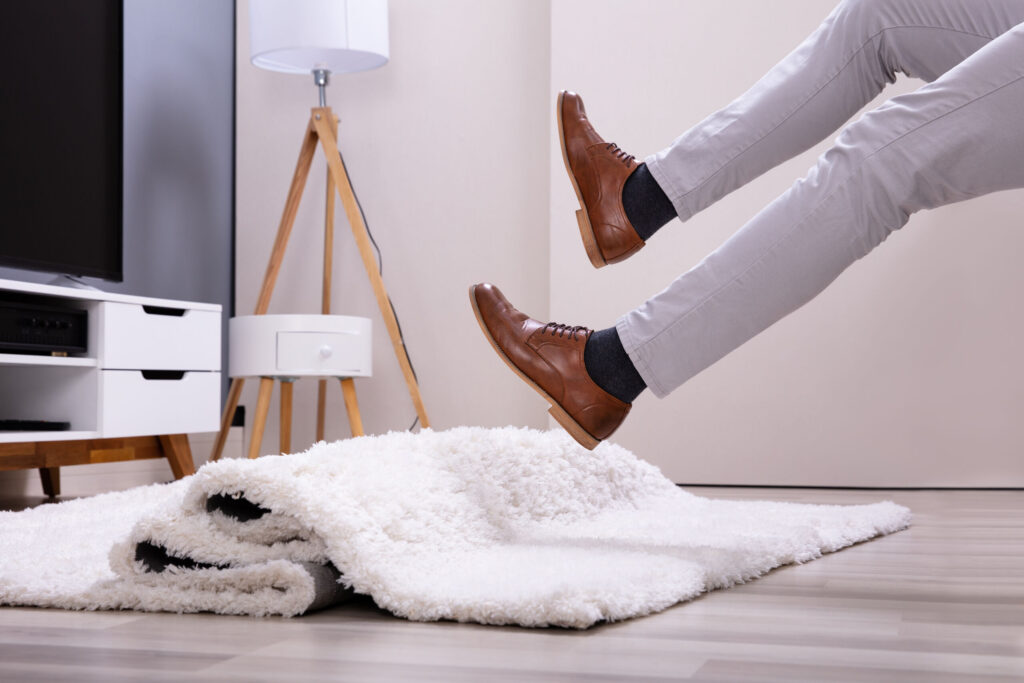
- Wet floors from tracked-in rain or snow without mats
- Recently mopped floors with no warning signs
- Loose or curled entrance mats
- Cracked or uneven tile
- Elevator floors that stop unevenly with the lobby floor
Stairwell Hazards
- Worn, chipped, or missing stair treads
- Broken or missing handrails
- Burned-out or absent stair lighting
- Debris left on stairs by cleaning contractors
- Water leaks from the roof or upper floors
Buildings with high foot traffic in areas like Jackson Heights, Elmhurst, and Corona often see these hazards repeat until someone gets hurt.
How Are Private Landlord Cases Different From NYCHA Cases?
A private landlord fall follows the ordinary personal injury timeline and rules. Public housing falls do not. In private buildings, the tenant typically has three years to file, and evidence collection focuses on the landlord’s records and any HPD violations. In public housing, NYCHA falls follow a stricter 90-day Notice of Claim rule, and the lawsuit itself must generally be filed within one year and 90 days.
For a tenant, the difference matters immediately. Missing the NYCHA notice window can bar the claim entirely, while a private case still has room to breathe. Confirming who owns and manages the building is often step one.
Common Problems Tenants Face When Bringing These Claims
Renters often run into the same obstacles when they try to hold a landlord accountable for a fall.
The Landlord Blames the Tenant
Defense attorneys and insurance carriers often argue that the tenant should have seen the hazard, was wearing improper footwear, or was distracted. New York’s pure comparative negligence rule allows recovery even when the injured person shares some fault, though any assigned percentage reduces the total recovery.
Missing Maintenance Records
Some landlords produce no maintenance logs, no cleaning schedules, and no repair records. That absence itself can support constructive notice, since the landlord cannot show it inspected or maintained the area. Prompt requests for HPD complaint history and prior incident reports often fill the gaps.
Comparing Hazards, Duties, and Common Evidence
| Hazard Type | Common NYC Location | Duty or Code That Often Applies | Typical Evidence |
| Wet lobby floor | Entrance during rain/snow | Multiple Dwelling Law § 78; HMC maintenance duties | Video, weather records, absence of mats or signage |
| Broken stair tread | Interior stairwell of walk-up | HMC stairway maintenance rules | Photos, prior 311 or HPD complaints |
| Missing handrail | Multi-flight stairwell | NYC Building Code handrail requirements | Photos, inspection reports |
| Poor stairwell lighting | Windowless interior stairs | HMC lighting requirements | Photos, tenant complaints, work order history |
| Torn lobby carpet | High-traffic entryway | Multiple Dwelling Law § 78 | Video, prior tenant reports |
| Elevator misleveling | Lobby entrance to elevator | Elevator maintenance contract; HMC | Elevator inspection records, maintenance logs |
Key Laws and Deadlines for NYC Apartment Fall Cases
New York’s apartment liability rules combine landlord-tenant law, city housing code, and general negligence deadlines.
The Three-Year Statute of Limitations
Under CPLR § 214, most private landlord slip and fall claims must be filed within three years of the date of the fall. Cases involving public entities, including NYCHA and city-owned buildings, follow shorter deadlines and require a Notice of Claim.
Waiting even a few weeks can be costly. Surveillance video from lobby cameras is often overwritten within days, and cleaning contractors may rotate staff or discard schedules.
Landlord Duties for Sidewalks and Common Areas
Landlord responsibility does not end at the front door. In many cases, landlord duties under NYC 7-210 extend to abutting sidewalks, meaning falls just outside the entrance may involve the same owner. This overlap matters for injured tenants and delivery workers who fall in the entryway or on the sidewalk immediately outside.
New York’s pure comparative negligence rule also applies, so any percentage of fault assigned to the tenant reduces, but does not bar, recovery.
What Compensation May Include After an Apartment Building Fall
A successful apartment building slip and fall claim in New York may include compensation for medical bills (both past and future), lost wages and reduced earning capacity, pain and suffering, out-of-pocket costs such as physical therapy or transportation to medical appointments, and long-term care needs in serious injury cases.
Insurance carriers often undervalue soft-tissue injuries and pre-existing conditions. Documenting treatment from the emergency room through follow-up care typically helps show how the fall changed the tenant’s daily life.
When Should You Talk to a Lawyer About a Lobby or Stairwell Fall?
Speaking with a personal injury attorney may be helpful when:
- You needed medical treatment after the fall
- The landlord or management company asked you to sign a statement
- You reported the hazard before the fall and it was not repaired
- The building is owned by NYCHA or another public entity with shorter deadlines
- You are unsure whether cleaning contractors or the landlord is responsible
- The insurance carrier for the building contacted you with a quick settlement offer
An attorney can typically send a preservation letter, request HPD complaint records, and gather maintenance logs before evidence disappears.
Practical Guidance After a Fall in Your Apartment Building
Many injured tenants find these steps helpful in the days after a fall:
- Report the fall to the superintendent and management in writing
- Take photos of the hazard, lighting, and surrounding area from multiple angles
- Get names and unit numbers for any witnesses
- File a 311 complaint if the hazard remains (this creates a public record)
- Save the shoes and clothing worn at the time
- Seek medical attention promptly and follow the treatment plan
- Keep copies of all prior repair requests, texts, or emails to the landlord
Keeping communications with the landlord and insurance carrier in writing typically protects the tenant’s position later.
Apartment Slip and Fall Questions Answered by Attorneys
How long do I have to sue a NYC landlord after a lobby or stairwell fall?
For most private landlords, the deadline is three years from the date of the fall under CPLR § 214. Buildings owned by NYCHA or other public entities require a 90-day Notice of Claim and typically a lawsuit within one year and 90 days.
Can I still recover if my building has code violations but I did not know about them at the time?
Yes. Prior HPD violations tied to the hazard, such as a documented lighting complaint or an open repair order, can help establish that the landlord had notice of the condition even if the injured tenant was not aware.
What if the fall involved an elevator that stopped between floors?
Elevator cases often involve additional defendants, including the elevator maintenance company. Inspection records, service logs, and prior malfunction reports are typically key evidence, and shorter deadlines may apply if the building is publicly owned.
Can guests or delivery workers file a claim if they fall in a NYC apartment building?
Yes. Landlords owe a duty to non-tenants who are lawfully on the property. Guests, package delivery workers, home health aides, and repair technicians can all pursue a claim if a hazardous condition caused the injury.
Can I sue my landlord if I fell in the stairwell of a rent-stabilized apartment building?
Yes. Rent regulation does not change the landlord’s obligation to maintain common areas. If poor maintenance contributed to the fall, a claim under general negligence law and the Multiple Dwelling Law may still apply.
What if I never reported the broken step before I fell?
You may still have a case. Constructive notice can support a claim when the hazard was visible, obvious, and had existed long enough that the landlord should have discovered it during routine inspection.
I fell in the lobby but the building has a cleaning contractor. Who do I sue?
Both the landlord and the cleaning company may share responsibility, depending on their contract and who was on-site. An attorney can review the maintenance arrangement to identify each responsible party.
Does immigration status affect my ability to sue after a fall?
No. New York courts allow personal injury claims regardless of immigration status. Our team is bilingual and handles cases for tenants across the New York metro area.
Reaching Out After a Fall in Your Building
Falling in the place where you live can shake more than your body, and it can affect your ability to work, sleep, and get around. Our New York slip and fall attorneys can evaluate your apartment building case and explain the options available under state and city law.
Omrani & Taub offers free, confidential consultations in English and Spanish, and works on a contingency fee basis, so tenants pay no attorney fees unless the case results in a recovery. Call our Manhattan office at 212-714-1515, Queens at 718-714-1515, or Westchester at 914-714-1515 to talk with someone who can walk you through the next steps.